Top 10 Best Countries to Outsource Software Development 2026
Find the best countries to outsource software development. Our 2026 guide ranks 10 nations on cost, talent, and risk to help you hire elite engineers.

Most advice about the best countries to outsource software development is still stuck on labor arbitrage. That's outdated. If you're leading engineering, you shouldn't be asking where code is cheapest. You should be asking where you can reliably find elite engineers who can ship, communicate, and raise the standard of your team.
That changes the ranking. The ten countries below are India, Ukraine, Poland, the Philippines, Mexico, Vietnam, Argentina, Canada, Romania and Brazil. India leads on scale, Poland and Ukraine on engineering depth, and Mexico, Argentina and Brazil on working-hour overlap with U.S. teams.
A cheap vendor with weak architecture discipline is expensive. A slightly pricier team that can own cloud infrastructure, stabilize release pipelines, or build a serious AI product is a bargain. The right country isn't the one with the lowest rate card. It's the one with the strongest pockets of technical excellence for the kind of team you're building.
Some countries win on scale. Some win on regulatory alignment. Some win because your team can work with them in real time without turning every sprint into an async mess. If you're serious about building top-tier global engineering teams, you need to evaluate countries the same way you'd evaluate senior hires: skill density, specialization, communication, resilience, and long-term fit.
If you want a broader remote hiring lens beyond software outsourcing alone, Go Hires' expert remote work guide is a useful companion read.
Table of Contents
1. India - The Market Leader - What India is actually best for
2. Ukraine - Engineering Excellence & Specialized Talent - Why Ukraine still makes sense
3. Poland - European Quality & Technical Expertise - Where Poland is strongest
4. Philippines - Customer-Centric & Process-Oriented - Best use case for the Philippines
5. Mexico - Geographic Proximity & Cultural Alignment - What Mexico is best for
6. Vietnam - Rising Powerhouse & Cost Efficiency - What Vietnam is best for
7. Argentina - Technical Depth & Latin American Bridge - Why Argentina is underrated
8. Canada - Proximity, Quality & Regulatory Compliance - Where Canada earns its premium
9. Romania - Emerging Hub & Strong Technical Culture - Best fit for Romania
10. Brazil - Scale, Innovation & LATAM Gateway - Where Brazil stands out
Top 10 Software Outsourcing Countries Comparison
Final Thoughts
1. India - The Market Leader
If you need scale, India is still the default answer. It remains the world's largest offshore destination for software development outsourcing, and that position isn't based on hype. It's based on capacity, delivery history, and the ability to stand up serious engineering organizations fast.
India's IT workforce exceeds 5 million engineers, and hourly developer rates typically range from $15 to $40, according to Netcorp Software Development's country comparison. That's why enterprise buyers keep coming back. You can build product squads, platform teams, QA functions, and support engineering at a scale most countries can't match.
The problem is quality spread. India has exceptional engineers, but it also has a huge range between average and elite.
What India is actually best for
India is strongest when you need a large hiring surface across cloud, enterprise platforms, AI/ML, DevOps, and long-term product maintenance. It's also one of the few markets where you can build a blended model: a few elite senior leads, a wider execution team, and specialized contractors around them.
Use India when these are your priorities:
Fast scale: You need to add engineers quickly without waiting on a thin local market.
Enterprise depth: You need people comfortable with AWS, Azure, React, Node.js, Java Spring Boot, or .NET.
Long-lived delivery: You aren't staffing a one-off sprint. You're building an operating model.
Practical rule: In India, never outsource your judgment. Keep architecture, code review standards, and technical interviewing under your control.
If you're entering this market for the first time, this guide to outsourcing software projects will save you from the usual mistakes.
The smartest move isn't handing over a whole roadmap and hoping for the best. It's using India for staff augmentation or managed pods with hard technical oversight from your side. That's how you get access to top-tier engineers without inheriting delivery chaos.
2. Ukraine - Engineering Excellence & Specialized Talent
Ukraine earns its spot because strong engineering cultures don't disappear overnight. The country has long been associated with deep technical talent, especially for companies that need serious engineers rather than process-heavy outsourcing factories.
That matters for AI systems, infrastructure-heavy products, cybersecurity work, and complex backend platforms. Ukrainian teams are often best when the problem is hard, ambiguous, or technically unforgiving.
A lot of engineering leaders already know this from experience. Grammarly, GitLab, and Wix all built meaningful engineering footprints tied to Ukrainian talent. Those examples matter because they reflect trust in high-skill product engineering, not just task execution.

Why Ukraine still makes sense
If you're hiring in Ukraine, don't do it for commodity work. Do it for engineers who can own difficult systems. The best Ukrainian developers tend to be strong in algorithms, backend design, infrastructure thinking, and product problem-solving.
That doesn't mean you ignore risk. You build around it.
Use distributed operating models: Don't centralize every critical dependency in one location.
Protect continuity: Mirror documentation, credentials, and deployment access across regions.
Prioritize senior density: A smaller group of elite engineers beats a larger mediocre team.
Build your Ukraine strategy around resilience, not optimism.
For leaders using augmentation to access specialized talent without overcommitting operationally, this staff augmentation guide is the right model to study.
Ukraine is still one of the best countries to outsource software development when the work demands engineering judgment. If your product lives or dies on technical quality, Ukraine deserves serious consideration.
3. Poland - European Quality & Technical Expertise
Poland is a strong pick if you want engineers who can ship in a disciplined product environment without the coordination drag that often shows up in more distant delivery models. Stop treating Poland as a budget option. A key reason to hire there is quality control.
The country has one of the deepest developer markets in Central and Eastern Europe, with a large, established base of engineers and software firms, as noted in UVIK's analysis of top outsourcing countries. Size matters here, but only because it increases your odds of finding top-tier specialists instead of settling for generalist vendors.
That is Poland's actual advantage. It produces a meaningful share of engineers who work well inside demanding, structured teams. You see it in cloud infrastructure, DevOps, fintech systems, enterprise platforms, cybersecurity, and modernization work tied to regulated industries. If your roadmap includes platform reliability, auditability, or complex backend integrations, Poland deserves to be near the top of your list.
Where Poland is strongest
Poland is one of the better countries on this list for companies chasing top 1% engineering talent in environments where process quality matters as much as code quality. The best teams are not cheap, and they should not be. They are valuable because they reduce rework, communicate clearly, and operate with the standards you'd expect from a serious in-house European engineering org.
Use Poland for work like this:
DevOps and cloud platform engineering: Strong fit for teams building internal platforms, CI/CD pipelines, observability stacks, and infrastructure automation.
Fintech and regulated software: Good option for products that need stable architecture, security discipline, and clean implementation under EU rules.
Enterprise modernization: Useful for refactoring legacy systems, rebuilding core applications, and integrating new services into messy existing environments.
Cybersecurity-heavy projects: Poland has a solid technical culture for secure development, access control, and operational rigor.
Poland also tends to work well for companies that care about engineering maturity, not just coding output. You can find teams there that write clear documentation, challenge weak requirements, and raise delivery risks early instead of hiding them until the deadline slips.
Pick Poland when bad architecture, weak communication, or compliance mistakes would cost more than a higher hourly rate.
My advice is simple. Do not hire in Poland for commodity ticket-closing. Hire there when you need dependable senior engineers, strong DevOps capability, and teams that can plug into a European product organization without constant translation, oversight, or cleanup.
4. Philippines - Customer-Centric & Process-Oriented
The Philippines isn't where I'd send the hardest systems architecture work first. It is where I'd look when process discipline, communication, and long-term service reliability matter more than showing off algorithmic brilliance.
That distinction matters. A lot of software leaders make the mistake of treating every engineering need the same. They aren't the same. Some teams need distributed systems experts. Some teams need dependable execution across defined workflows, strong communication with stakeholders, and solid operational consistency.
The Philippines has built a reputation around that second category. It's especially effective for support-heavy engineering functions, front-end execution, QA-adjacent delivery, platform operations with clear runbooks, and customer-facing product work where responsiveness matters.
Best use case for the Philippines
Use the Philippines when you need an engineering organization that behaves predictably. That's valuable for companies scaling internal tooling, maintaining established products, or supporting larger global teams that already have architecture leadership elsewhere.
A strong setup looks like this:
Clear technical direction: Your lead architects define system boundaries and standards.
Strong documentation: Requirements, acceptance criteria, and handoff rules are explicit.
Operational cadence: Sprint rituals, escalation paths, and ownership lines are locked in.
The best Filipino engineers do very well in structured environments where expectations are clear and communication is constant. That's why the country works well for managed services, support engineering, quality processes, and front-end or integration work connected to broader product teams.
If you're expecting a vendor to turn vague product ideas into world-class architecture with no oversight, this isn't the market I'd bet on first. If you want reliable, communicative engineers embedded into a well-run system, the Philippines is a smart call.
5. Mexico - Geographic Proximity & Cultural Alignment
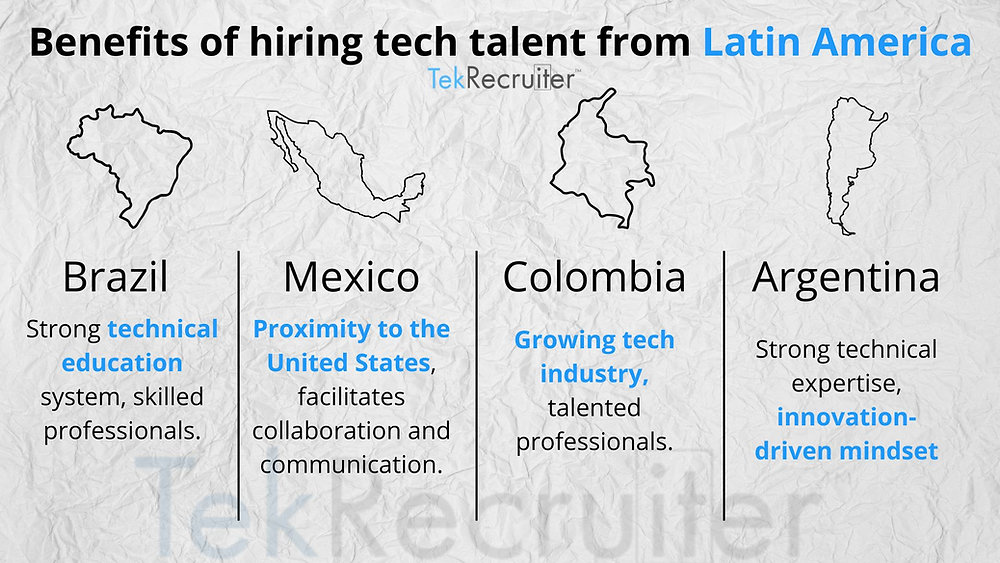
For U.S. companies, Mexico solves a problem most offshore models never fix: real-time collaboration. You don't need heroic project management when your engineers can work the same day, join the same standups, and resolve blockers before they become tomorrow's problem.
That nearshore advantage is why Mexico belongs on any serious list of the best countries to outsource software development. The technical ecosystem is established, the business culture is familiar to U.S. teams, and travel is easy enough that relationships can become real, not just Slack threads.

What Mexico is best for
Mexico is a strong option for product squads that need frequent feedback loops. It works well for agile teams, modernization programs, shared services engineering, and cross-functional collaboration between U.S. product managers and distributed developers.
You also get a practical advantage many leaders underrate: face time. Visiting teams in Guadalajara, Monterrey, or Mexico City is far easier than building relationships on the other side of the world. That changes trust, communication, and hiring durability.
If you're deciding between offshore and nearshore models, TekRecruiter's breakdown of offshoring vs nearshoring is worth reading before you commit.
Mexico isn't automatically better than India or Poland. It is better when your delivery model depends on collaboration speed, shared working hours, and lower communication drag. For many U.S.-based engineering leaders, that's the deciding factor.
6. Vietnam - Rising Powerhouse & Cost Efficiency
Vietnam is a better bet than many buyers realize. If your goal is to hire disciplined builders, not just cheap capacity, this market deserves a serious look.
The mistake is judging Vietnam only on hourly rates. The stronger case is talent density in specific areas. Vietnam has built real depth in mobile engineering, product development, cloud implementation, and fast-moving delivery work. The country also keeps producing engineers who are comfortable in modern stacks and distributed team models, which matters more than a low quote from a vendor.
According to Kearney's 2023 Global Services Location Index, Vietnam remains one of the world's most competitive offshore destinations because of its talent availability, financial attractiveness, and business environment. That lines up with what engineering leaders need. You can hire capable teams at rational cost without dropping into the chaos that often comes with the bottom of the market.
What Vietnam is best for
Vietnam is a strong fit for execution-heavy product teams with clear technical leadership. It works especially well for mobile apps, SaaS platforms, QA automation, cloud migration support, and AI-enabled product features that require implementation more than frontier research.
This is not the country I would pick for every high-ambiguity, architecture-first initiative. I would pick it for teams that already know what good looks like and need a reliable delivery engine behind senior product and engineering direction.
A smart Vietnam setup usually includes:
Clear technical ownership: Keep architecture and standards in the hands of proven senior engineers.
Well-defined product scope: Teams move faster when requirements are concrete and priorities stay stable.
Strong review culture: Enforce code review, testing discipline, and documentation from day one.
That is how you get the upside.
If you are comparing Vietnam with nearshore options, this guide to Latin America tech outsourcing options helps clarify the tradeoff. Vietnam usually wins on cost efficiency and execution capacity. Nearshore markets usually win on working-hour overlap.
My recommendation is simple. Choose Vietnam when you have a real engineering system, defined delivery processes, and a roadmap that benefits from strong implementation talent. Avoid it if you want a partner to rescue weak product management or make strategic technical decisions for you. Vietnam can produce excellent outcomes, but the top 1 percent results come from companies that bring structure and know how to spot the best teams.
7. Argentina - Technical Depth & Latin American Bridge
Argentina is one of the most underrated countries on this list, especially for U.S. companies that care about engineering quality and real-time collaboration. Too much outsourcing advice still defaults to India or Eastern Europe, even when a nearshore model would fit the actual operating reality better.
Argentina offers 134,000+ developers, top English proficiency in Latin America, and a 0 to 2 hour time difference from the U.S. East Coast, according to Improving's analysis of outsourcing destinations. For engineering managers, that overlap isn't a nice-to-have. It provides a significant operational advantage.
Why Argentina is underrated
Argentina is a strong fit for product companies that want developers who can think, not just execute tickets. Buenos Aires in particular has long produced engineers with strong full-stack instincts, solid system design habits, and comfort working with North American teams.
The cost picture is also compelling. The same source notes rates of $25 to $50 per hour and cost savings versus U.S. rates. More important than the price, though, is the collaboration quality. You can run daily standups, architecture reviews, incident response, and product feedback sessions without turning your calendar into a mess.
For companies building in Latin America or staffing nearshore teams with stronger engineering depth, this guide to Latin American tech outsourcing is the right lens.
If you're a U.S. CTO and you haven't seriously looked at Argentina, you're probably overvaluing offshore scale and undervaluing time-zone alignment.
Argentina is one of the best countries to outsource software development when you want nearshore access to serious product engineers.
8. Canada - Proximity, Quality & Regulatory Compliance
Canada isn't on this list because it's cheap. It isn't. Canada is here because some teams shouldn't optimize for cheap.
If you're hiring for regulated products, enterprise integrations, AI engineering tied to sensitive data, or core platform work that needs close coordination with U.S. leadership, Canada is one of the safest bets available. The talent quality is strong, communication is easy, and the legal environment is familiar.
You'll also avoid a lot of the friction that comes with more distant outsourcing models. Shared business norms, easier contracting, and strong cross-border compatibility make Canada feel less like outsourcing and more like distributed hiring.
Where Canada earns its premium
Canada is best when you want a high-trust extension of your core team. That includes principal engineers, technical leads, AI specialists, platform architects, and senior data engineers who need to influence product and infrastructure decisions directly.
Use Canada when these factors matter most:
Compliance confidence: You're building in a tightly regulated environment.
Leadership proximity: Senior engineers need regular contact with product and executive stakeholders.
Hiring durability: You want fewer operational surprises.
Canada works especially well for companies that have already learned a painful lesson: low rates don't help when you spend six months cleaning up weak architecture. If your roadmap includes critical systems and high expectations, Canada's premium starts to make sense quickly.
9. Romania - Emerging Hub & Strong Technical Culture
Romania is one of the better European choices for companies that want technical depth with more flexibility than the most crowded markets. It doesn't get the same attention as Poland, but that's part of the opportunity.
The country has a strong engineering culture, good alignment with Western teams, and a track record in software, infrastructure, and security-adjacent work. It's a practical choice for companies that want EU proximity without automatically paying for the most in-demand talent markets first.
Romania also benefits from being part of the broader Eastern European engineering tradition: strong technical education, serious developers, and teams that usually adapt well to product-focused environments.
Best fit for Romania
Romania is a smart option for DevOps, backend systems, cybersecurity-heavy projects, and managed engineering relationships where you want a stable long-term partner. It's also a good place to look when you're building a balanced team and need reliable mid-to-senior engineering talent.
Real companies have already validated the country's technical reputation. Bitdefender and UiPath are the obvious signals. They show what strong Romanian engineering can produce when the environment is ambitious enough.
Don't treat Romania as a bargain-bin Poland alternative. Treat it as its own market with strong technical culture and good strategic value for European and U.S. companies that want serious engineers in a less overhyped ecosystem.
10. Brazil - Scale, Innovation & LATAM Gateway
Brazil earns its place on this list for one reason: it can produce real product teams, not just overflow capacity.
That distinction matters. Countries with a large domestic tech economy usually develop better engineers because local companies force them to solve harder product, scale, payments, and infrastructure problems. Brazil fits that pattern. Its market is big enough to create pressure-tested talent in fintech, enterprise software, cloud platforms, and consumer digital products.
If your goal is access to top engineering talent in Latin America, Brazil deserves serious attention. The country has one of the region's strongest startup ecosystems, and global companies continue to expand engineering and cloud operations there. The Brazil country guide from BairesDev is useful here because it frames Brazil as a mature nearshore market, not a niche option.
Where Brazil stands out
Brazil's best engineers are usually strongest in product-heavy environments. Look there for teams that have worked on payments, banking infrastructure, marketplaces, internal platforms, and cloud-backed applications. That experience is more valuable than generic "full-stack" availability.
English proficiency is the main filter. Screen hard and screen early. Once you clear that bar, Brazil can give you strong technical output and much better time zone alignment than Eastern Europe or Asia for U.S. companies.
Brazil is a strong choice when you need:
Fintech and digital product talent: Brazil's local market has pushed engineers into real transaction-heavy, user-facing systems.
LATAM hiring depth: The talent pool is large enough to support both selective hiring and team expansion over time.
Cloud and platform engineering: You can find capable infrastructure and modernization talent, especially in larger tech centers.
Brazil is not the cheapest option in Latin America, and that is fine. Cheap is not the point. If you want top 1% engineers in the region and need a country that can support both early hires and larger long-term teams, Brazil is one of the few markets with the scale to matter.
Top 10 Software Outsourcing Countries Comparison
Stop comparing countries like you are buying interchangeable developer hours. The core question is simpler. Where can you reliably hire top-tier engineers for the kind of work you need done?
This comparison is built around that standard. Cost still matters, but elite teams win on talent density, technical specialization, communication discipline, and how hard it is to hire the top slice of the market.
Location | Access to Top 1% Talent | Hiring Difficulty | Cost Position* | Best Fit | Clear Advantage |
|---|---|---|---|---|---|
India. The Market Leader | High at the top end, but screening has to be aggressive | Medium | Lower cost than North America and Western Europe | Large team builds, platform engineering, AI, cloud, enterprise delivery | Scale. No other market on this list matches its depth across domains. |
Ukraine. Engineering Excellence & Specialized Talent | Very high in senior engineering, AI, security, and hard technical work | Medium to High | Mid-range | AI/ML, cybersecurity, backend systems, senior IC hiring | Strong concentration of serious engineers with deep algorithmic and systems skills. |
Poland. European Quality & Technical Expertise | Very high, especially in cloud, DevOps, data, and enterprise systems | Medium | Mid to high | Long-term product teams, modernization, regulated European delivery | One of the safest picks for companies that want quality first and low management drag. |
Philippines. Customer-Centric & Process-Oriented | Moderate for core software engineering, stronger in support-oriented delivery | Low to Medium | Lower cost | QA, support-heavy product teams, customer-facing workflows, process-driven execution | Communication discipline and operational consistency. |
Mexico. Geographic Proximity & Cultural Alignment | Good, with stronger value for U.S.-aligned collaboration than for deep specialization | Low | Mid-range | Nearshore product squads, hybrid teams, frequent collaboration with U.S. stakeholders | Time zone overlap and practical working alignment. |
Vietnam. Rising Powerhouse & Cost Efficiency | Good and improving fast, especially in mobile, product engineering, and high-output teams | Medium | Lower cost | Cost-conscious product builds, mobile, full-stack execution, scale-up hiring | Strong output for the price if you run a tight hiring process. |
Argentina. Technical Depth & LATAM Bridge | High, especially in product engineering, architecture, and technically mature startups | Medium | Mid-range | U.S.-facing product teams, complex application development, startup hiring | Strong engineers plus excellent overlap with U.S. teams. |
Canada. Proximity, Quality & Regulatory Compliance | Very high, especially for senior hires in AI, platform, and regulated environments | Low | High cost | Compliance-heavy software, principal-level hiring, product and platform leadership | Premium quality with minimal legal and operational friction. |
Romania. Emerging Hub & Strong Technical Culture | High in pockets, especially security, backend, and infrastructure | Medium | Mid-range | Cybersecurity, backend systems, DevOps, EU-based engineering teams | Strong technical education and better upside than many buyers expect. |
Brazil. Scale, Innovation & LATAM Gateway | Good at the top end, especially in fintech, cloud-backed products, and larger delivery teams | Medium | Low to mid-range | Fintech, product engineering, regional expansion, larger LATAM team builds | Scale inside Latin America, with real depth in transaction-heavy software. |
*Cost position reflects broad market placement relative to other countries in this list, not fixed hourly rates. Country-specific pricing and talent observations are drawn from sources cited earlier in each country section. No duplicate source links are introduced here because this table summarizes those section-level findings rather than presenting new standalone rate data.
If you want the safest all-around answer, pick India or Poland based on your operating model. Pick India for hiring scale and broad technical coverage. Pick Poland for tighter execution, stronger consistency, and less variance in candidate quality.
If you want concentrated specialist talent, Ukraine remains one of the strongest markets in the field. If you want nearshore collaboration for U.S. teams, Argentina and Mexico are usually better strategic choices than buyers assume. If you want cost efficiency without settling for weak engineering, Vietnam deserves much more attention.
The wrong way to use this table is to sort by price. The right way is to match the country to the engineering problem. Top 1% talent exists in every market here, but it does not exist at the same density, in the same specialties, or with the same hiring effort.
Final Thoughts
The best countries to outsource software development aren't universally "best." They're best for a specific operating model.
If you want massive scale and broad capability, India stays on top. If you want elite European engineering with strong technical rigor, Poland is hard to beat. If you're a U.S. company that needs overlap and speed, Argentina and Mexico deserve far more attention than they usually get. If you're hiring for specialized, difficult engineering work, Ukraine still belongs in the conversation. If you want disciplined execution at attractive pricing, Vietnam is stronger than many buyers realize. If you need premium quality with minimal compliance drama, Canada is the cleanest answer. Romania and Brazil are both strong strategic plays if you know what you're hiring for. The Philippines remains useful when communication discipline and process stability matter more than deep systems complexity.
That last point is where most companies get this wrong. They compare countries as if they're shopping for interchangeable labor. They're not. You're not buying coding hours. You're building an engineering system. Every country on this list has a different profile of strengths, risks, and management requirements.
So be honest about what you're building.
If your team needs principal-level cloud engineers, don't optimize for the cheapest geography. If you're scaling support-heavy product delivery, don't overpay for a market built around high-end architecture talent. If your roadmap depends on constant real-time collaboration, don't force an offshore model that turns every sprint into asynchronous negotiation.
The strongest global engineering leaders use countries differently. They don't pick one location and call it strategy. They build combinations. India for scale. Poland for regulated platform work. Argentina or Mexico for nearshore product squads. Ukraine or Romania for specialist depth. Brazil for regional expansion. Canada for core leadership or compliance-heavy systems.
That approach is also how you find top 1% talent. Elite engineers exist in all of these markets, but they don't surface through lazy vendor selection. They show up when the screening is technical, the role is clear, and the delivery model respects the complexity of the work.
Here's the blunt version. If you're still evaluating outsourcing primarily through hourly rates, you're managing procurement, not engineering. Great software teams aren't assembled by shopping for discounts. They're built by identifying where great engineers live, then creating a structure where they can do their best work.
That's the frame for 2026. Global hiring isn't a workaround anymore. It's a competitive advantage, if you treat it like one.
If you want to build with the top 1% of engineers instead of sorting through average vendors, TekRecruiter can help. TekRecruiter is a technology staffing and recruiting firm for engineering roles, founded in 2020. We recruit software, AI, DevOps, cloud, data, cybersecurity, Salesforce, and ERP engineers who join your own team, including senior nearshore engineers in Latin America at about $39–$57 an hour all in. When you would rather hand the work to an outside team, we also find and vet the best software development company for it in the country you’ve chosen. See how MSP & Outsourcing Search works.
 Ron SmithPresident & Lead RecruiterTekRecruiter