How to Hire AI Engineers: The 2026 Hiring Playbook
Struggling to hire AI engineers? Our 2026 playbook provides a step-by-step guide on sourcing, screening, assessing, and retaining top 1% AI talent.

The fastest way to miss on an AI hire is to run a clean, polished software engineering process that never tests AI engineering judgment. That sounds backwards until you look at the demand curve. Between 2021 and 2025, job postings requiring generative AI skills jumped from 55 unique postings in January 2021 to nearly 10,000 by May 2025, or roughly a 180-fold increase according to Lightcast's 2025 generative AI job market analysis. Companies are hiring for a new capability, but many are still evaluating candidates like it's 2018.
That mismatch is why so many teams think they hired an AI engineer when they hired a smart generalist who can prompt a model, wire up an API, and produce a good demo. Shipping dependable AI systems is different. It requires judgment around data quality, model behavior, failure modes, observability, latency, infrastructure cost, and user trust. Those skills don't show up in trivia interviews.
Table of Contents
Why Most Companies Fail to Hire Great AI Engineers - The process itself repels strong candidates
Defining the AI Engineer You Actually Need - Start with the business bottleneck - Four common archetypes
Sourcing Strategies Beyond LinkedIn - Inbound that attracts serious builders - Outbound that doesn't feel like spam - When a specialist partner makes sense
The Engineer-to-Engineer Screening Blueprint - Why old interviews fail - What to test instead - How to handle AI-assisted coding in interviews
Designing Assessments That Predict Performance - A better take-home shape - What a strong rubric actually scores
Crafting a Competitive Offer and Closing the Deal - Use compensation data as strategy - Sell the work, not just the package
Deploy Your Top 1% of AI Engineers with TekRecruiter - The first 90 days matter more than most teams admit - Where a specialist recruiting model helps
Why Most Companies Fail to Hire Great AI Engineers
Great AI hiring fails long before the offer stage. It fails when a company mistakes AI engineering for standard software hiring with a few extra model questions added on top.
That mistake shows up everywhere. Recruiters screen for tool names instead of shipped systems. Hiring managers reuse generic coding loops built for backend roles. Interviewers ask algorithm questions that are easy to score but weak at predicting whether someone can choose the right model interface, handle messy data, or recover when an LLM feature behaves unpredictably in production.
AI-assisted coding has made this gap wider. Strong candidates can generate acceptable code quickly. What separates them now is judgment. Can they scope a problem correctly, pick the right level of abstraction, evaluate failure modes, and make trade-offs between speed, cost, reliability, and model quality? If the interview loop cannot see that, it will miss the best people and overrate polished generalists.
Another failure point is wishful thinking about the market. A weak process does not fix itself just because compensation is high or the company has a known brand. Candidates who have built with models in production usually have options, and they are trained to spot fuzzy problem statements fast.
For leaders thinking through workforce impact more broadly, DocsBot's perspective on AI and jobs is worth reading. The shift is straightforward. Companies are placing a higher premium on engineers who know how to work with AI systems, not engineers who can merely talk about them.
The process itself repels strong candidates
Good AI engineers judge the team while the team is judging them. A toy take-home, a recruiter who cannot explain the stack, or an interviewer obsessed with trivia sends a clear message. This company has not defined the work well enough to hire for it.
I have seen candidates withdraw after one call because nobody could explain where the model sat in the product, what data constraints existed, or who owned evaluation after launch. That is not a candidate problem. It is an operating problem exposed during hiring.
A clear, respectful loop improves conversion because it signals competence. It also gives candidates evidence that the team can execute. That is why a disciplined candidate experience in technical hiring matters more in AI roles than many companies expect.
Great AI candidates don't want a harder interview. They want evidence that your team knows what it's building.
Defining the AI Engineer You Actually Need
The title "AI Engineer" is often too vague to be useful. Before you hire AI engineers, decide where the bottleneck lives. Is the problem model development, product integration, infrastructure reliability, or research uncertainty? Different bottlenecks require different people.

Start with the business bottleneck
If your team already knows what model or API to use and the hard part is making it work in production, you probably don't need a research-heavy hire. If your product depends on proprietary training workflows, experimentation, or new model approaches, you may need one.
Most mis-hires happen because companies write a single job spec that bundles everything. They ask for deep learning, distributed systems, MLOps, product instincts, prompt engineering, data pipelines, and research publications. That person might exist. They usually aren't the right first hire.
A more useful way to define the role is to map it to the job to be done:
Role focus | Best for | Weak fit when |
|---|---|---|
Machine Learning Engineer | Building, tuning, and deploying models tied to product outcomes | You mainly need platform reliability or data plumbing |
Applied Scientist | Translating research into product behavior and measurable experiments | The work is mostly infrastructure and scaling |
MLOps Engineer | Serving, monitoring, CI/CD, model lifecycle, reproducibility | The team still hasn't defined the model approach |
Research Scientist or Research Engineer | Novel methods, experimentation, frontier uncertainty | You need a dependable feature in production this quarter |
Four common archetypes
The Machine Learning Engineer is usually the best first AI hire for product teams. This person can move from notebook to service, make pragmatic model choices, and work with product and backend engineers without turning everything into a science project.
The Applied Scientist fits when there is genuine ambiguity around how to improve the product and the answer won't come from straightforward implementation. This person should be able to run disciplined experiments, reason from weak signals, and explain why an approach failed.
The MLOps Engineer becomes essential once the team has more than one model, more than one environment, or any operational burden around retraining, serving, rollback, and observability. A lot of AI projects stall not because the model is poor, but because nobody owns deployment and monitoring seriously.
The Research Scientist or Research Engineer is often over-hired for business problems that need execution. If your team says it wants innovation, ask whether it needs novelty or better delivery.
Practical rule: Hire for the problem, not the title.
If you need help translating business needs into a sharper spec, this example AI engineer job description is a useful reference point because it forces role clarity around outcomes, responsibilities, and technical scope.
Sourcing Strategies Beyond LinkedIn
LinkedIn is fine for visibility. It isn't enough for finding the people who can build and ship AI systems. The strongest candidates are usually busy. They're writing code, maintaining open source, publishing technical thinking, or solving hard internal problems where nobody sees them unless you know where to look.
Inbound that attracts serious builders
Inbound works when it creates technical credibility. Most employer branding doesn't. Generic "we're hiring AI talent" posts attract broad interest but little precision.
Better inbound signals include:
Technical writing with specifics. Publish short posts on what your team learned from model evaluation, retrieval quality issues, cost control, or serving trade-offs. Engineers respond to hard-won details.
Open-sourcing a narrow internal tool. A small evaluation harness, observability helper, or dataset validation utility often attracts the right audience faster than a branded careers campaign.
Public architecture honesty. If your stack uses AWS, Vertex AI, Azure ML, PyTorch, LangChain, custom evals, or a Postgres plus vector retrieval pattern, say so. Serious candidates want context.
Outbound that doesn't feel like spam
Strong outbound starts with the work, not the title. Look for people who leave a public trail of judgment.
Good channels include GitHub maintainers and contributors in AI-adjacent tooling, authors who publish practical implementation notes, and speakers from smaller technical events where the content is still hands-on. One tactic that consistently works is to contact contributors who improved reliability or tooling around a project, not just the most visible model authors. Builders who fix deployment friction are often better hires than people with the loudest profiles.
When you reach out, reference a concrete decision they made. Mention a pull request, a benchmark design, a serving approach, or a post they wrote about production trade-offs. That creates an actual conversation instead of another recruiting message.
When a specialist partner makes sense
There are times when internal sourcing isn't the bottleneck. Internal evaluation is. If your team can't quickly tell who is credible, more pipeline just creates more noise.
That's where a specialist recruiting partner can help. The useful model isn't volume sourcing. It's technical qualification before your engineers spend time. Firms that work in engineering niches and understand role design can reduce wasted interviews and sharpen candidate-market feedback. For teams comparing options around engineering recruiting support, that's usually the deciding factor.
The Engineer-to-Engineer Screening Blueprint
Great AI hires rarely reveal themselves in trivia rounds. They show up in how they reason through messy systems, weak signals, and trade-offs under constraint. If your screen still centers on memorized algorithms or polished whiteboard answers, you are testing for interview practice, not job performance.

Why old interviews fail
Classic coding rounds miss the part of AI engineering that matters most. The work is not just writing code. It is deciding what to measure, where failures come from, which shortcuts are safe, and when a model problem is really a data, retrieval, product, or reliability problem.
That gap gets wider now that AI-assisted coding is normal. A candidate can generate decent scaffolding in minutes. What those tools do not supply is judgment. They do not tell you whether an evaluation set is biased, whether a latency cut will wreck answer quality for high-value users, or whether a fallback path hides a deeper retrieval issue.
So the screen should look more like a technical review with another engineer. Put the candidate in front of a realistic problem and see how they break it down.
What to test instead
The best first screen is scenario-based and narrow enough to discuss in depth. Give the candidate a problem that looks like the job, then press on the decisions.
Useful prompts sound like this:
Sparse data problem. How would you improve predictions for users with limited history?
RAG reliability problem. What would you instrument first if retrieval looked fine offline but users reported weak answers?
Latency problem. Where would you cut cost or response time without wrecking answer quality?
Deployment problem. How would you roll out a model-backed feature safely when outputs are probabilistic?
Listen for sequencing, not slogans. Strong candidates ask what is known, what is missing, and which failure mode matters first. They talk about baselines, observability, rollback plans, bad labels, prompt drift, evaluation gaps, and user impact. Weak candidates jump straight to tools or model swaps because they have learned to perform expertise instead of applying it.
One useful companion resource is to find top data engineer questions if the role depends heavily on pipelines, data quality, and feature reliability. AI systems fail upstream more often than hiring teams admit.
How to handle AI-assisted coding in interviews
Banning AI tools creates a fake environment. Real engineers use them. Good screening shows whether the candidate can direct those tools instead of hiding behind them.
For practical roles, let the candidate use an AI assistant in a bounded exercise and then inspect the decisions behind the output:
Ask what they delegated. Boilerplate, tests, refactors, and API lookup are all reasonable answers.
Ask what they rejected. Strong engineers spot fragile abstractions, subtle bugs, and hand-wavy architecture suggestions.
Ask how they validated the result. Look for tests, traces, edge cases, metrics, and adversarial checks.
Ask what they would watch in production. Good answers cover logs, latency, quality regression, cost, and rollback triggers.
If a candidate cannot explain why an AI-generated approach is risky, they did not solve the problem. They copied a draft and hoped it held.
This is the shift many teams still miss. In an AI-assisted workflow, syntax matters less than supervision. The best candidates are fast because they know what to trust, what to verify, and where generated code tends to fail.
References also become more useful when you ask about operating behavior instead of personality. Use reference questions that probe ownership, debugging, and execution under pressure, then compare those answers against what you saw in the screen.
Here's a strong example of the kind of collaborative discussion many teams are moving toward:
Designing Assessments That Predict Performance
A take-home project can be the highest-signal step in the process or the biggest waste of everyone's time. The difference is whether it mirrors real work. Most AI assessments fail because they reward polished notebooks and leaderboard thinking. Real teams need engineers who can make imperfect systems dependable.
A better take-home shape
The strongest assessment isn't a toy classification task with a clean dataset and one hidden metric. It looks more like an internal problem brief.
Give the candidate:
A messy dataset or imperfect retrieval set with missing fields, noisy labels, or uneven class coverage.
A baseline implementation that works but has obvious limitations.
A practical business constraint such as inference speed, cost, explainability, or a rollout deadline.
A short product context so they can reason about what failure means.
Then ask for a working improvement and a concise PR-style write-up. Not a slide deck. Not a research paper. A practical engineering artifact.
A good prompt might ask a candidate to improve performance for an underserved user segment, stabilize answer quality on ambiguous queries, or reduce system brittleness without changing the underlying model family. Those are the kinds of choices they'll face on the job.
What a strong rubric actually scores
Many organizations overweight model quality and underweight everything else. That's how they end up hiring people who can optimize a benchmark but can't ship safely.
A better rubric scores across several dimensions:
Area | What to look for |
|---|---|
Problem framing | Did the candidate identify the real bottleneck before coding? |
Data judgment | Did they inspect data quality, leakage risk, skew, and edge cases? |
Implementation quality | Is the code readable, testable, and easy to reason about? |
Evaluation design | Did they choose sensible metrics and explain limitations? |
Operational thinking | Did they discuss monitoring, rollback, logging, and drift risks? |
Communication | Can another engineer understand what changed and why? |
Candidates who do well here usually expose their thinking in small but telling ways. They note assumptions. They explain what they didn't have time to do. They tell you which result they trust least. That's production behavior.
If your project includes pipelines or data movement, it also helps to borrow questions from adjacent disciplines. This collection of data engineer interview questions is useful because many AI failures start in ingestion, transformation, and feature reliability, not in the model itself.
A strong AI assessment should answer one question: can this person improve a messy system without pretending the mess doesn't exist?
Crafting a Competitive Offer and Closing the Deal
Compensation matters. It matters even more when the role is hard to define and the market is still recalibrating around what AI engineering work is worth. If you want to hire AI engineers competitively, use compensation data to set expectations early and frame the opportunity precisely.
In the United States, median salaries for AI and machine learning engineering roles reached approximately $187,500 in 2026. The median is about $150,000 for junior roles, $193,000 for mid-level roles, and $240,000 for senior roles. Senior engineers specializing in deep learning or LLMs can earn $200,000 to $312,000 or more, based on the salary benchmarks compiled by Axial Search.

Use compensation data as strategy
Those numbers shouldn't sit in a spreadsheet after finance signs off. They should shape the way you scope the role.
If you're budgeted for a mid-level hire but the job requires owning architecture, deployment, model behavior, and cross-functional technical leadership, you're not scoped correctly. Either reduce the surface area of the role or raise the compensation band. AI candidates can tell quickly when a company wants senior ownership at mid-market pricing.
Another common mistake is using salary alone as the closing mechanism. That works sometimes, but it usually loses to a better overall story.
Sell the work, not just the package
Strong AI engineers evaluate opportunity through a narrower lens than many companies expect. They care about whether the work is real, whether the team can ship, and whether the environment supports good engineering.
Your offer should make these points concrete:
Mission clarity. What product or business problem will they own?
Data access. Will they work with meaningful data and feedback loops, or just demos?
Technical scope. Can they influence architecture, evals, and deployment decisions?
Team quality. Who will they collaborate with day to day?
Operating environment. Do they have the compute, tooling, and decision velocity to do the job well?
Candidates also want honesty. If the stack is still immature, say so. If the company is early and the eval framework is weak, say that too. The right people won't be scared off by unfinished systems. They will be scared off by fuzzy thinking.
Closing great AI talent usually comes down to one thing. The candidate believes your team understands the work deeply enough to let them do meaningful engineering.
Deploy Your Top 1% of AI Engineers with TekRecruiter
Hiring is only half the problem. Teams also lose good AI engineers because the first months are chaotic. The new hire arrives to vague ownership, broken access, unclear success metrics, and no agreement on what "production-ready" means. That failure gets blamed on talent when it's usually an onboarding and operating problem.

The first 90 days matter more than most teams admit
A good first quarter for an AI engineer is structured around access, context, and progressively harder ownership.
A practical first-90-day checklist looks like this:
First weeks. Give access to code, data, environments, dashboards, and prior decisions. Pair them with an engineer who can explain why the system looks the way it does.
First month. Assign a contained improvement project with visible value. Something measurable, but not mission-critical on day one.
By the second month. Have them review failure cases, model behavior, or pipeline weaknesses and propose a roadmap.
By the third month. Let them own a scoped production change end to end, including instrumentation and post-launch review.
That sequence matters. AI engineers need enough context to avoid naive fixes, but they also need enough ownership to gain momentum.
Where a specialist recruiting model helps
When companies can't afford to spend months refining role definitions, building sourcing channels, and redesigning technical screens, it makes sense to use a partner that already operates in engineering-heavy hiring. One option is TekRecruiter, a technology staffing and recruiting firm focused on software and AI engineering recruiting that handles direct hire and staff augmentation through real technical conversations.
That model fits AI hiring because shallow keyword screening doesn't work well here. Deep technical conversations, role calibration, and practical signal matter more. For engineering leaders, the key value is less time spent on weak pipeline and more time spent evaluating credible candidates against real team needs.
The companies that consistently hire well do three things. They define the role tightly, evaluate judgment instead of memorization, and onboard with intention. Everything else is secondary.
TekRecruiter is a technology and engineering staffing and recruiting agency that finds the top 1% of AI engineers anywhere, for direct hire, contract-to-hire or staff augmentation.
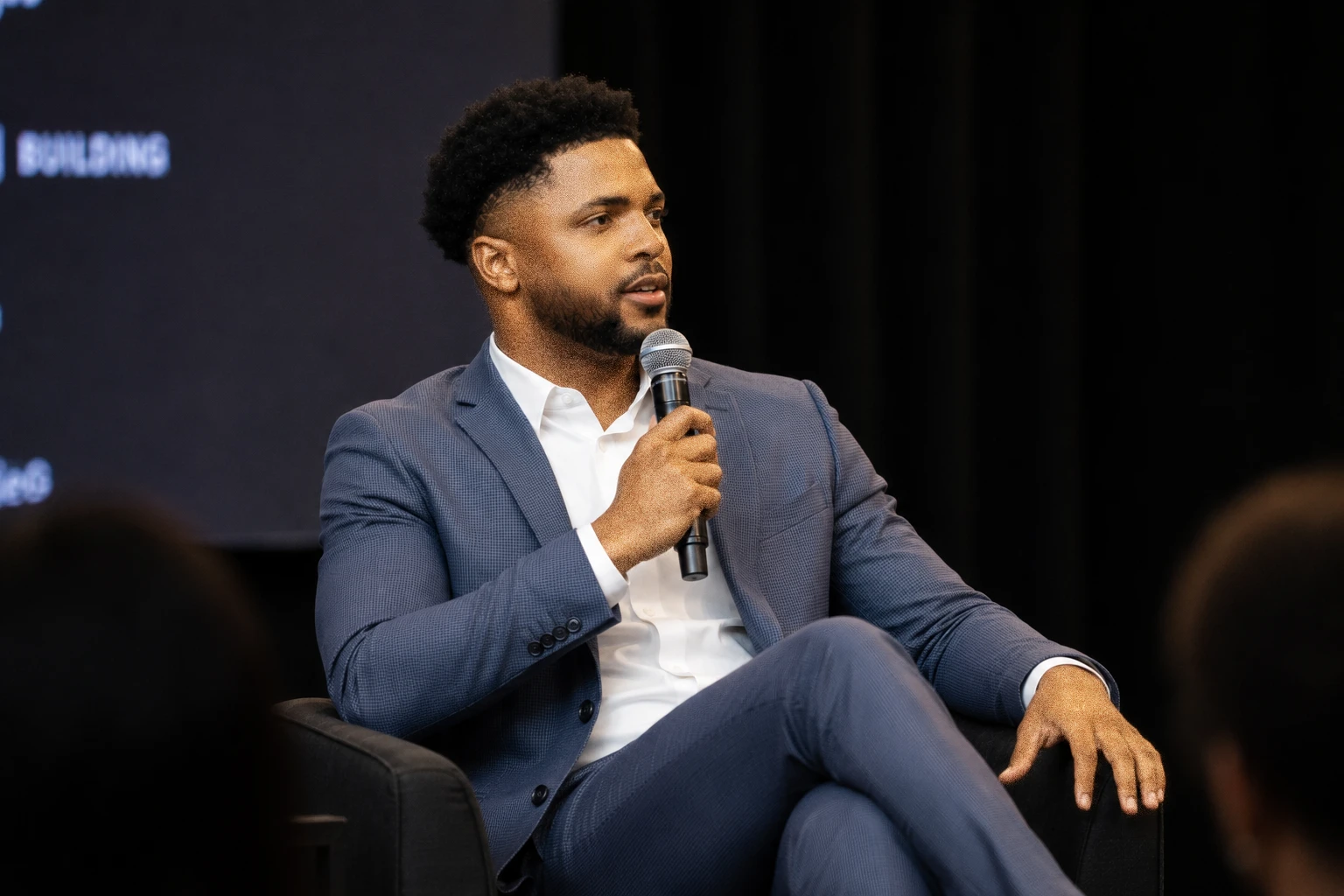 Ron SmithPresident & Lead RecruiterTekRecruiter