A Practical Guide to Nearshore Agile Development
Discover how nearshore agile development helps you build elite engineering teams. Learn to reduce costs and accelerate projects without sacrificing quality.
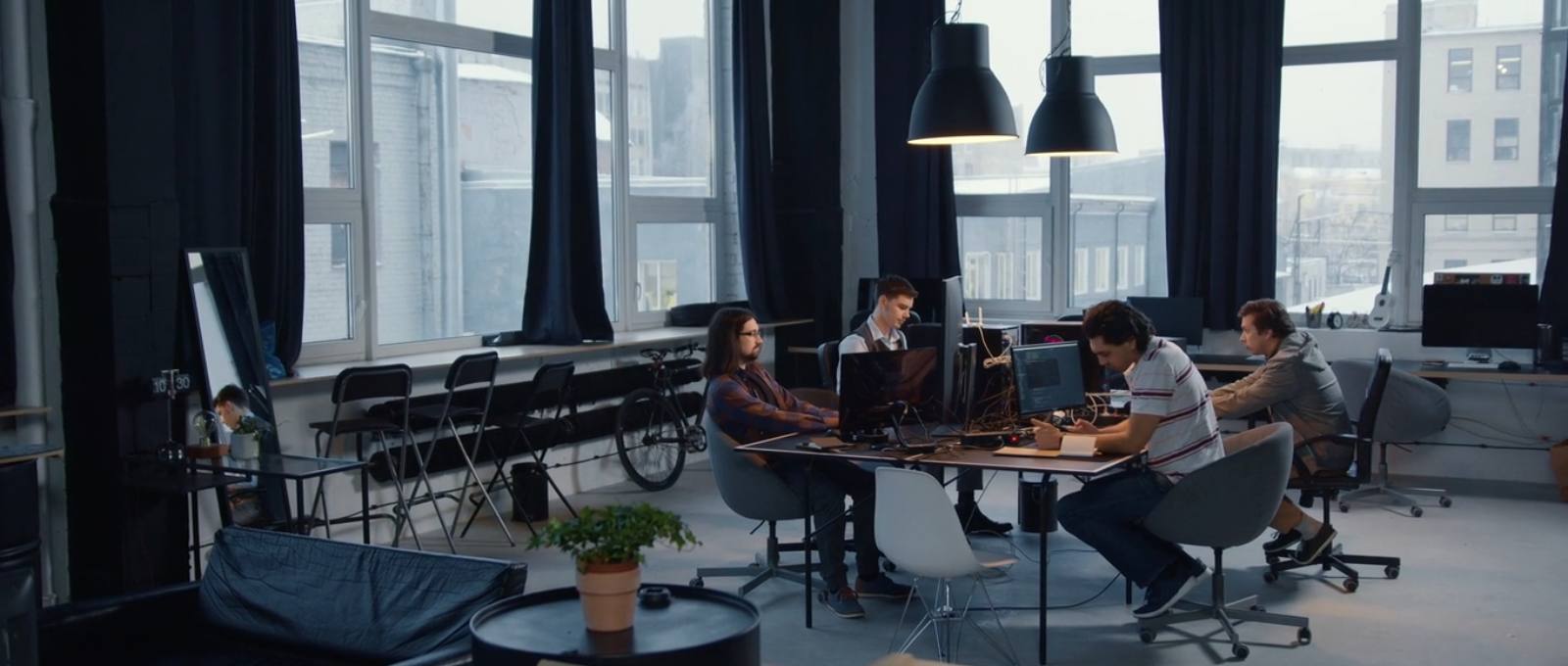
Having trouble finding top-tier tech talent without torching your budget? You’re not alone. This is the exact problem nearshore agile development was built to solve. It’s a strategy that merges the high-octane, collaborative energy of Agile with the talent and cost advantages of a nearby, time-zone-aligned team.
What you get is scalability and efficiency, all in one powerful package.
Why Leaders Are Choosing Nearshore Agile Development
Think of your software project as a high-performance race car. Your onshore strategists are the race engineers designing the winning strategy. A nearshore team is the world-class pit crew in the very next garage. They operate in perfect sync, using the same real-time data and speaking the same language to ensure every move is executed with lightning speed.
This is a world away from the traditional offshore model. That’s like having your pit crew on a delayed video call from the other side of the globe. The time-zone lag creates friction, slows down critical decisions, and completely undermines the rapid, iterative cycles that make Agile work in the first place. Nearshore agile development smashes that roadblock.
The Synergy of Proximity and Process
The real magic here is combining two powerful ideas: Agile's iterative speed and nearshore's geographic advantage. As software development gets more complex, this model has become a powerhouse for driving up project success rates. It’s not just talk—organizations that adopt Agile methodologies see a staggering 60% improvement in project success over traditional waterfall approaches. Leanware.co has some great data on this.
When you fuse that with a nearshore delivery model, you shorten development cycles through sprints, stand-ups, and retrospectives that feel like everyone is in the same room. The onshore-nearshore synergy becomes seamless.
This integration delivers real, tangible benefits that hit your bottom line and your innovation pipeline. By aligning workdays, you unlock:
Real-Time Collaboration: Problems get solved now, not 12 hours from now.
Cultural Alignment: Shared cultural context means fewer misunderstandings and genuinely stronger, more cohesive teams.
Cost Efficiency: You get access to elite talent pools without paying the sky-high premiums of major domestic tech hubs. We break this down further in our guide on the 10 nearshore outsourcing benefits for tech leaders in our detailed guide.
The true value of nearshore isn't just about saving money. It's about saving money without sacrificing the collaborative velocity that is absolutely essential for Agile to succeed. It’s about building a single, cohesive team that just happens to work from two different locations.
Ultimately, this strategy lets you build a high-performance engine for your most critical AI, cloud, and DevOps initiatives.
Ready to build your elite engineering team? TekRecruiter connects innovative companies with the top 1% of vetted nearshore engineers. We specialize in deploying high-impact talent to accelerate your roadmap and drive innovation, anywhere.
Choosing the Right Model for Your Agile Team
When you're building an agile team, the staffing model you pick is more than just a logistical choice—it’s the foundation for your project's success. Your decision directly hits communication, iteration speed, and your ability to pivot on a dime. That's the whole point of Agile, right? Get the model wrong, and you’ll introduce friction that can grind your entire development cycle to a halt.
Let’s quickly break down the three main options: onshore, offshore, and nearshore. Each comes with its own set of trade-offs, especially when you’re running a fast-paced, highly collaborative workflow.
The onshore model means hiring talent right in your own country. This gives you perfect alignment on time zones, culture, and language, which makes real-time collaboration a breeze. The downside? The costs can be staggering, and the local talent pool for niche skills is often surprisingly shallow. Scaling quickly without blowing your budget becomes a real challenge.
On the other end of the spectrum is the offshore model. It promises massive cost savings by tapping into talent pools in faraway countries. But there's a catch, and it's a big one: crippling time-zone delays. An eight-to-twelve-hour difference completely shatters the rhythm of daily stand-ups and rapid feedback loops. Agile sprints turn into sluggish, asynchronous exchanges that kill your project's velocity.
This is exactly where nearshore agile development shines, hitting the perfect sweet spot between the two.
Finding the Agile Sweet Spot with Nearshore
Nearshore partners are located in neighboring countries, which means you're dealing with minimal time-zone differences—typically just one to three hours. This small distinction makes a world of difference. It means your teams share the vast majority of their workday.
Suddenly, daily stand-ups, pair programming sessions, and urgent problem-solving can all happen in real-time, just like they would with an onshore team.
You get the fluid, back-and-forth communication of an in-house team paired with the cost savings and expanded talent access of a global model. It effectively kills the biggest weakness of offshore—the communication gap—while sidestepping the main constraints of onshore, which are high costs and talent scarcity.
Agile thrives on this kind of seamless interaction, and it directly correlates to much higher project success rates. The data doesn't lie.
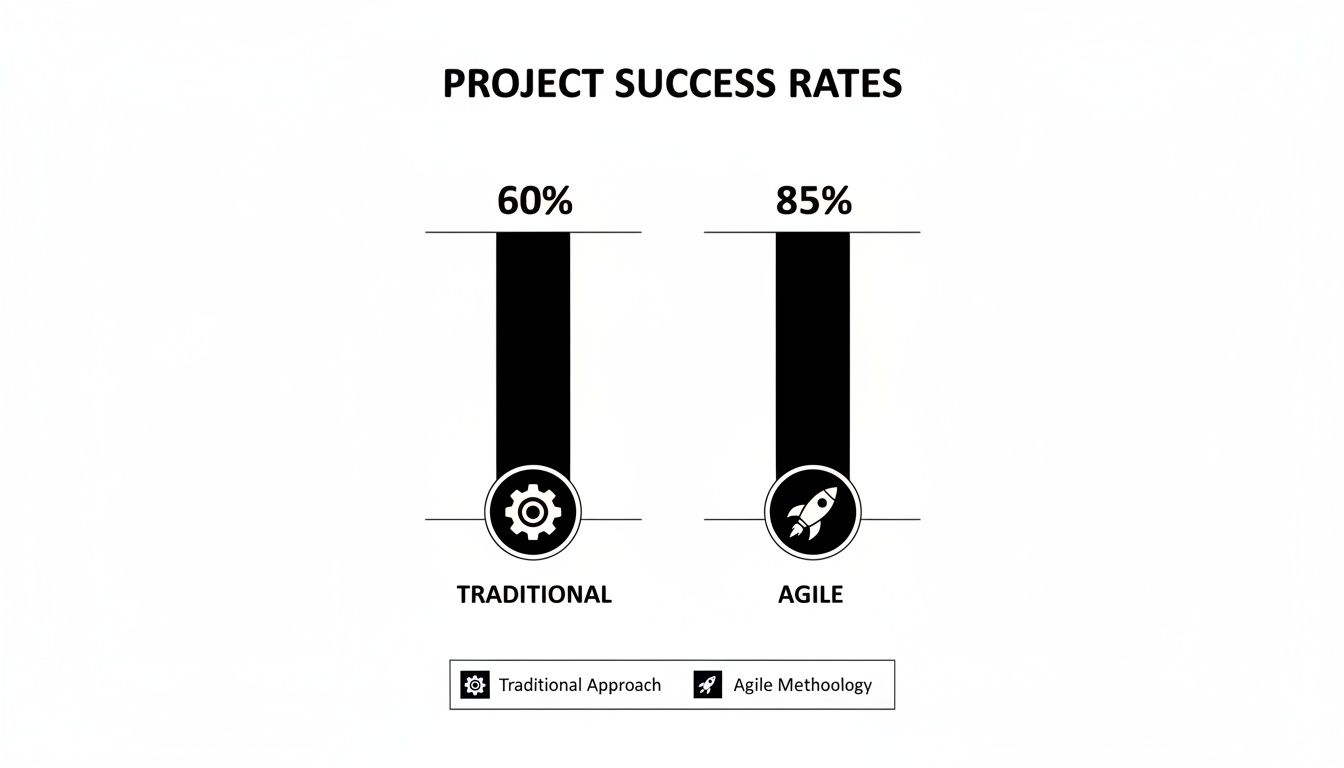
This chart makes it clear: adopting an Agile approach dramatically boosts your chances of success. That benefit is fully unlocked when a nearshore team can collaborate with you in real time. For a deeper dive into how these models really stack up, check out our definitive tech guide comparing nearshore vs offshore.
Development Model Comparison for Agile Projects
To make the choice even clearer, let's put these models head-to-head across the factors that truly matter for any Agile project. For any IT Director or Program Manager looking to maximize efficiency, this table cuts right to the chase.
Factor | Onshore Model | Offshore Model | Nearshore Model (The Agile Sweet Spot) |
|---|---|---|---|
Time Zone Overlap | Excellent (Full workday alignment) | Poor (8-12 hour difference, minimal overlap) | Excellent (4-8 hours of daily overlap) |
Real-Time Communication | Seamless and instant | Delayed and asynchronous | Fluid and immediate |
Talent Pool Access | Limited by local market supply | Vast global access | Expanded access to regional tech hubs |
Cost Savings | None (Highest cost option) | High (Significant labor cost reduction) | Moderate (30-50% average savings) |
Cultural Proximity | High (Shared national culture) | Low (Significant cultural differences) | High (Similar business and social norms) |
This breakdown shows why nearshore isn't just a compromise; it's a genuine strategic advantage. It balances the equation perfectly, giving you the collaborative horsepower you need for agile to work without the financial or logistical headaches of the other models. If you're looking for practical guidance, reviewing the best nearshore software development companies is a great way to see how top-tier providers structure their teams.
Stop compromising between project velocity and your budget. TekRecruiter lets you deploy the top 1% of engineers from elite nearshore locations. We provide the talent and the expertise to build a high-performance team that works in sync with yours, pushing your projects forward and driving real innovation.
How to Build a High-Performance Nearshore Team
Building a high-performance nearshore team isn't about managing contractors. It's about cultivating a single, unified engineering unit. The real work is moving from theory to action, and that requires a practical roadmap focused on structure, communication, and culture. The goal is to integrate your nearshore engineers so deeply into your workflow that the geographic distance becomes nothing more than a footnote.

Success starts the moment you stop seeing them as hired hands and start treating them as true team members. This mindset shift is everything. They should be active participants in every single Agile ceremony—from sprint planning to retrospectives—contributing ideas and challenging assumptions just like their onshore counterparts. This only works when you find a partner that vets for more than just technical skill; they have to screen for cultural fit and sharp communication.
Defining Critical Roles and Responsibilities
First thing's first: you have to define who does what. Ambiguity is the enemy of agility. Your nearshore team should mirror the structure of your best onshore teams, with crystal-clear roles that drive accountability and kill confusion before it starts.
A typical nearshore Agile pod might include:
Software Engineers (Front-end, Back-end, Full-stack): The core builders responsible for writing, testing, and deploying code.
QA Automation Engineers: Specialists who build and maintain the automated testing suites that ensure quality and keep release cycles fast.
DevOps Engineers: The experts managing the CI/CD pipeline, infrastructure, and deployment processes, making sure everything flows smoothly from dev to production.
Scrum Master: A facilitator (who can be onshore or nearshore) dedicated to clearing roadblocks and keeping the team true to Agile principles.
Every role needs a defined scope. This clarity ensures that each person, regardless of location, knows exactly how they contribute to the sprint goals and the project's bigger picture. For a deeper look at how these teams are structured, check out our guide on everything you need to know about nearshore staffing for CTOs and HR leaders.
Establishing a Rock-Solid Communication Cadence
Once roles are set, your next priority is a communication rhythm that makes real-time collaboration feel effortless. This is where the time-zone alignment of nearshore agile development really shines. Your entire communication cadence should be built around core Agile ceremonies. Make them mandatory, inclusive, and energetic.
Key practices include:
Daily Stand-ups: This is a non-negotiable 15-minute meeting at the same time every day. It’s the team’s daily pulse check where everyone shares progress, plans, and blockers.
Sprint Planning: A collaborative session where the entire team—onshore and nearshore—defines the work for the upcoming sprint. This creates shared ownership from day one.
Sprint Reviews & Retrospectives: These meetings are vital for feedback and continuous improvement. Involving nearshore members ensures their insights are captured and that the whole team learns and evolves together.
The goal is to create a 'one team' culture. This means your nearshore engineers aren't just assigned tasks; they are integral collaborators who actively shape the product and the process. Their voices must be heard and valued in every meeting.
This approach transforms passive coders into proactive problem-solvers. The focus on real-time collaboration is why distributed nearshore Agile models have become a global standard. In fact, Agile projects are 28% more successful than traditional ones, a trend driven by seamless communication across shared time zones. For leaders fighting talent shortages, blending U.S. project management with specialized talent from regions like Latin America proves you can scale without sacrificing an ounce of quality.
Implementing Effective Project Governance
Finally, a high-performance team needs a clear framework for governance. This isn't about micromanagement; it's about creating total transparency and alignment around shared goals.
Effective governance includes:
Shared KPIs: Both onshore and nearshore teams should be measured against the exact same key performance indicators, like velocity, cycle time, and bug rates.
Transparent Tracking Systems: Use tools like Jira to provide a single source of truth for all work. Everyone gets full visibility into the backlog, sprint progress, and the release roadmap.
Consistent Code Reviews: Implement a peer-review process where onshore and nearshore engineers review each other’s code. This is a powerful way to share knowledge and maintain high quality across the board.
By defining roles, locking in a communication cadence, and implementing transparent governance, you create the blueprint for a cohesive, high-output engineering unit.
Building this kind of integrated team takes more than just finding developers; it requires a partner who gets the nuances of creating a unified culture. At TekRecruiter, we specialize in deploying the top 1% of vetted nearshore engineers who are hand-picked for both their elite technical skills and their ability to thrive in a collaborative Agile framework. Let us help you build the team you need to accelerate your vision.
The Essential Tech Stack for Seamless Collaboration
Let’s be honest: the success of any distributed Agile team comes down to its tools and processes. While the right tech stack can make collaboration feel almost magical, the tools themselves are just enablers. It's the disciplined, human-centric processes behind them that truly bridge the distance in nearshore agile development.
This isn’t just a list of popular software. We’re going to dig into how you configure and use these tools to create a single, unified environment where your nearshore and onshore teams operate like they’re sitting in the same room. For any nearshore team, picking the right remote team collaboration tools is the first and most critical step to making sure communication and productivity never skip a beat.
Creating Radical Transparency in Project Management
The heart of any healthy Agile workflow is a single source of truth. This is where tools like Jira or Azure DevOps come in, but they’re only as good as how you set them up. A messy, poorly managed board breeds confusion. A clean, well-structured one drives alignment and keeps everyone accountable.
To get there, you need to focus on a few key things:
Visual Simplicity: Your Jira board isn’t a place for abstract art. Configure it with clean, simple columns that map directly to your real-world workflow (e.g., To Do, In Progress, Code Review, QA, Done). If it needs a user manual, you've over-engineered it.
Detailed Tickets: Make it a non-negotiable rule that every ticket includes crystal-clear acceptance criteria and user stories. This simple discipline cuts down on the endless back-and-forth and empowers developers to grab a ticket and run with it.
Real-Time Dashboards: Set up shared dashboards with core metrics like burndown charts and velocity tracking. This gives everyone—from the newest developer to the CEO—an honest, instant snapshot of where a sprint actually stands.
The entire point of your project management tool is to kill ambiguity. Anyone on the team, from any location, should be able to glance at the board and know exactly what’s being worked on, who owns it, and where it is in the pipeline.
Fostering Dynamic Real-Time Collaboration
Project boards are great for tracking work, but the real magic of Agile happens in the moments of creative problem-solving. You have to find a way to replicate the energy of an impromptu whiteboard session or a quick "hey, can you look at this?" chat at someone's desk.
This is where a smart combination of tools comes into play:
Instant Messaging (Slack/Microsoft Teams): Don't let your conversations become a chaotic mess. Set up dedicated channels for specific projects and teams to keep discussions focused. More importantly, integrate notifications from your CI/CD pipeline and project management tools to create a central, living feed of everything happening on the project.
Virtual Whiteboards (Miro/Mural): These are absolutely essential. You can't run a collaborative sprint planning session, debate system architecture, or hold a meaningful retrospective without a shared digital canvas. These tools let the whole team visualize and build on ideas together, in real-time.
Source Code Management (GitHub/GitLab): Think of these platforms as more than just code repositories—they are collaboration hubs. Use pull requests as a space for deep-dive code reviews and technical discussions. This fosters a powerful culture of shared ownership over code quality.
Automating Feedback with CI/CD Pipelines
Finally, a rock-solid CI/CD (Continuous Integration/Continuous Deployment) pipeline is the technical glue that holds your entire process together. By automating your build, test, and deployment processes on platforms like AWS, Azure, or GCP, you create an instant, unbiased feedback loop.
When a developer pushes new code, automated tests kick off immediately, alerting the team to any breaks or bugs. This level of automation is a game-changer for distributed teams because it eliminates manual bottlenecks and enforces quality standards 24/7, without anyone having to worry about time zones.
Of course, managing distributed teams is a deep topic. For more strategies, check out our modern playbook for managing distributed teams.
Building a high-performing nearshore team is about so much more than just finding talent; it's about empowering them with the right tools and processes to do their best work. At TekRecruiter, we specialize in deploying the top 1% of engineers who are not only technically brilliant but are masters of thriving in a modern, tool-driven Agile world. Let us help you build the seamlessly integrated team you need to hit your goals faster.
Navigating Costs, Security, and Legal Frameworks
Beyond the collaborative energy and the right tech stack, a successful nearshore agile development strategy is built on a foundation of transparent costs, airtight security, and clear legal agreements. For any CTO or HR leader, getting these business realities right isn't just important—it's non-negotiable.
This is about moving past simple hourly rates to see the whole picture. It’s about making sure your investment is both financially smart and operationally secure from day one.

Let’s be honest: the primary driver for nearshore is often cost. But you have to calculate the total cost of ownership (TCO), not just a developer's salary. While you can realistically expect savings of 30-50% compared to onshore talent, a true TCO accounts for management overhead, tooling licenses, and any partner fees. This complete view gives you a realistic budget and stops surprise expenses from derailing your project.
This financial edge is a huge reason the global outsourcing market is projected to smash $405.6B by 2027, with nearshore models leading the pack. And with Gartner predicting over 70% of Agile teams will use AI assistants by 2026, the productivity gains in nearshore setups will only accelerate, making the financial case even stronger. You can get a deeper look at these nearshore software development trends shaping the future.
Safeguarding Your Intellectual Property
Security is everything. When your code, data, and IP are in the hands of a distributed team, you need ironclad protocols to shut down risk. A proactive security posture isn't just a good idea; it's your best defense against breaches or compliance nightmares.
Key security practices aren't complicated, they're just essential:
Access Control: Implement role-based access control (RBAC) so engineers can only access the systems and data they absolutely need for their tasks. No more, no less.
Data Encryption: All data, whether it's sitting on a server or flying across the network, must be encrypted using industry-standard protocols. This is non-negotiable.
Compliance Adherence: Your nearshore partner has to understand and comply with the regulations that matter to your business, whether it's GDPR, CCPA, or HIPAA.
A strong security framework isn't a barrier to agility; it's what makes agility possible. By setting clear rules and using secure infrastructure, you empower your nearshore team to innovate safely and with confidence.
Demystifying the Legal Landscape
Finally, your entire nearshore engagement needs to be wrapped in a clear legal framework. This protects everyone involved and sets crystal-clear expectations for the partnership. Don't treat legal documents like a formality—they are the operational blueprint for how you'll work together.
Your legal toolkit really comes down to three core documents:
Master Services Agreement (MSA): This is the foundational contract. It outlines the big-picture terms of the relationship, like payment schedules, liabilities, and how things end if they need to.
Statement of Work (SOW): This document gets into the nitty-gritty of a specific project. It defines the deliverables, timelines, and exactly who is needed to get the job done.
Non-Disclosure Agreement (NDA): A rock-solid NDA is critical for protecting your confidential information and trade secrets. It has to be legally enforceable in both your country and your partner's.
Navigating these business-critical areas requires a partner who brings more than just tech talent to the table. You need someone with proven expertise in secure, compliant global operations.
This is where TekRecruiter simplifies everything. We connect you with the top 1% of vetted nearshore engineers who already operate within a proven framework. We help you build your elite team with confidence, ensuring your costs, security, and legal structures are buttoned up from the start.
Your Elite Nearshore Engineering Team is Ready to Deploy
You’ve seen how nearshore agile development cuts right through the usual headaches of talent shortages, runaway costs, and the collaboration disconnect that kills offshore projects. It’s not a theory; it’s a proven playbook for getting your product roadmap moving faster, without sacrificing an ounce of quality.
So, let's stop talking about the solution and start building it.
TekRecruiter is your direct connection to the top 1% of vetted engineers in prime nearshore hubs. We don’t just find people to fill seats. We build integrated, high-performing teams that feel like a natural extension of your own.
This Isn’t Staffing. It’s a True Partnership.
We go way beyond just finding a resume that matches keywords. We provide expert, U.S.-based project management and deep, hands-on expertise in the technologies that actually drive your business forward. Our talent pools are built for today's most critical challenges.
Our core specialties include:
AI Engineering: Deploy machine learning models, build intelligent systems, and prep data at scale with elite AI specialists who get it done.
Cloud Platforms: Get certified experts in AWS, Azure, and GCP to build, optimize, and manage your cloud infrastructure the right way.
Salesforce Development: Customize your CRM and build powerful applications with seasoned Salesforce developers and architects who know the platform inside and out.
This focus means you get engineers who aren’t just technically sharp—they’re masters of the specific platforms you depend on every single day.
The goal isn't just to find a developer; it's to find the right developer. Our rigorous vetting ensures you get engineers with elite technical skills and the collaborative mindset that a thriving nearshore agile culture absolutely demands.
Flexible Models Built for How You Work
Every organization is wired differently. That’s why we ditched the one-size-fits-all approach for flexible engagement models that align with your real-world operational goals. Whether you need to plug a skills gap on an existing team or build a new squad from scratch, we have you covered.
Our models include:
Staff Augmentation: Seamlessly embed individual specialists into your current teams to crush skill gaps and inject immediate project velocity.
Direct Hire: Let us run the entire recruitment cycle to find, vet, and place permanent, full-time members on your team.
It’s time to stop making compromises between quality and cost. The friction of massive time-zone delays and the limits of your local talent pool are no longer your problem. By partnering with TekRecruiter, you can finally build the dream engineering team that will accelerate your roadmap, deliver real results, and give you a decisive edge.
Ready to build the engineering team you’ve always wanted? TekRecruiter helps innovative companies deploy the top 1% of engineers anywhere, backed by U.S.-based project management and deep expertise in AI, cloud, and more.
Let’s build your elite team together.
Frequently Asked Questions
When you're exploring a nearshore agile development strategy, a few key questions always come up. It's smart to have clear answers before you commit. Here are the direct, no-fluff insights engineering and HR leaders need to make the right call.
What's the Real Difference Between Nearshore and Offshore Agile?
It all boils down to one thing: time zone alignment. This is the secret ingredient that makes or breaks real-time collaboration. Your nearshore team works the same hours you do.
That means daily stand-ups, quick Slack huddles, and paired programming sessions happen naturally, during everyone's workday. You don't lose the rhythm and momentum that agile relies on.
Offshore, on the other hand, usually means an eight-hour (or more) time gap. That lag kills the agile process. Feedback loops stretch into days, simple questions get stuck in email queues overnight, and the whole iterative cycle grinds to a halt.
How Do You Actually Maintain a Strong Company Culture?
You have to be intentional about it. The biggest mistake is treating your nearshore team like a separate group of outside vendors. If you want this to work, you have to see them as a genuine extension of your core team. Full stop.
This isn't just a "nice to have." It's mission-critical. That means:
They're in all the same team meetings, all-hands calls, and virtual happy hours. No exceptions.
They get the same top-tier laptops, software licenses, and tools as your local engineers.
They have real career paths and know their contributions are making a real impact.
This is also where your hiring partner comes in. Finding a firm that screens for cultural fit—not just technical skills—is a huge part of the equation. You need people who will actively add to your team's dynamic.
A strong culture doesn't just happen. It’s what you get when you treat your entire distributed team as one unit, where every single person is empowered to contribute to the mission.
Are There Hidden Costs I'm Not Seeing?
While nearshore is a huge cost-saver, you should definitely plan for the total cost of ownership. Beyond salaries, you'll have your partner's management fee, recurring costs for software and hardware, and maybe some travel for an initial project kickoff or an annual team get-together.
But here’s the key takeaway: even after you account for all of that, you’re still looking at a total cost that’s 30-50% lower than hiring the same talent onshore. And you get those savings without the crippling productivity hits and communication headaches that almost always come with offshore models.
Ready to build the engineering team you’ve always wanted? As a premier technology staffing, recruiting, and AI Engineer firm, TekRecruiter allows innovative companies to deploy the top 1% of engineers anywhere. We bridge international borders to build elite engineering teams and solutions, backed by U.S.-based project management and deep expertise in AI, cloud, and more. Explore our services at https://www.tekrecruiter.com.