Top 10 Candidate Sourcing Strategies for Engineering 2026
Discover top candidate sourcing strategies for engineering teams in 2026. Attract and hire the best tech talent with these proven methods.

Stop Sourcing Engineers Like Sales Reps. Your outdated candidate sourcing strategies are failing because they weren't built for engineers. Relying on generic job boards and keyword stuffing is a race to the bottom. To hire the top technical talent, you need to think like an engineer, not a traditional recruiter.
The strongest engineering teams don't get built through volume outreach and resume bingo. They get built through technical credibility, sharp filtering, and real peer-to-peer conversations. If you're hiring AI engineers, DevOps leaders, platform specialists, cloud architects, or security talent, generic sourcing breaks fast because the best candidates can spot shallow outreach immediately.
That's why technically credible sourcing works. Engineers trust people who understand tradeoffs, can discuss architecture, and know the difference between someone who has touched Kubernetes and someone who has run production systems on it. This guide outlines 10 field-tested candidate sourcing strategies that prioritize technical depth, community engagement, and genuine peer-to-peer connection. It also ties each strategy to a hiring model that scales, from direct hire and staff augmentation to on-demand contractors and outsourced teams.
Table of Contents
1. Technical Screening by Engineers - Why this changes sourcing quality - How to run it without wasting engineering time
2. Specialized Engineering Talent Pools and Niches - Build talent pools by discipline, not by title - Where niche pipelines actually come from
3. Direct Hire Permanent Placement Strategy - When direct hire is the right move - What to screen for beyond the stack
4. Staff Augmentation and Contractor Networks - Use contractors for sharp problems - How to keep augmentation from turning into chaos
5. On-Demand Talent Bench and Rapid Deployment - Speed only works with pre-vetting - How to keep the bench warm
6. Community and Open Source Engagement Sourcing - Watch contributors, not just applicants - How to engage without acting like a spammer
7. Referral Networks and Employee Advocacy Programs - Referrals work when you operationalize them - What strong engineering referrals look like
8. Managed Services and White-Label Team Deployment - Source complete teams, not random individuals - What to lock down before deployment
9. Passive Candidate Reactivation and Relationship Nurturing - Your old pipeline is probably your best pipeline - How to reactivate people without sounding desperate
10. Skills-Based and Assessment-Driven Sourcing - Use assessments as evidence, not as a shortcut - What good skills-based sourcing looks like
Top 10 Candidate Sourcing Strategies Comparison
Deploying Your Sourcing Playbook at Scale
1. Technical Screening by Engineers
Most sourcing teams wait too long to apply technical judgment. That's backwards. If you want better engineering hires, your first serious screen needs to sound like a conversation between two people who've both been in the trenches.

A strong peer-level technical screen beats generic quizzes because it reveals how someone thinks under real constraints. You hear how they broke apart a scaling problem, how they handled production incidents, why they chose one cloud pattern over another, and what tradeoffs they made when the clean answer wasn't available. That tells you more than a canned assessment ever will.
TekRecruiter has built its model around that reality. Ron Smith's engineering background reflects the same principle good technical organizations already know. Serious engineers want to talk to someone who understands their work.
Why this changes sourcing quality
Stripe, Google, and other engineering-led organizations pull technical leaders into early conversations for a reason. Shallow screening creates false positives and false negatives. It pushes strong candidates away and keeps weak ones alive too long.
Practical rule: Judge how candidates reason, not how fast they recite trivia.
For senior DevOps and platform roles, architecture-first conversations work especially well. Ask how they designed CI/CD workflows, handled rollback strategy, set observability standards, or debugged noisy production failures. If they can't explain decisions clearly, they probably didn't own the work.
How to run it without wasting engineering time
Don't dump every resume on your senior engineers. Build a front-end filter with technically credible recruiters, then route qualified candidates into structured peer screens. Record those conversations, review them for calibration, and tighten the prompts over time.
A good screen usually includes:
Project ownership: Ask what they built, why it mattered, and what changed because of their work.
Decision quality: Push on tradeoffs, rejected options, and constraints from budget, time, or team capability.
Debugging method: Have them walk through a real failure, not a textbook problem.
Communication clarity: Strong engineers explain complexity without hiding behind jargon.
Later in the process, show candidates what good technical interviewing sounds like in practice.
2. Specialized Engineering Talent Pools and Niches
If your pipeline says “software engineer” and nothing else, you don't have a talent pool. You have a junk drawer.
AI engineering, DevOps, SRE, cloud systems, data engineering, Salesforce, ERP, and cybersecurity each require different sourcing instincts. The best candidate sourcing strategies segment talent by domain, toolchain, depth, and work context. A machine learning engineer who tunes inference pipelines is not interchangeable with a data engineer who owns batch orchestration. A DevOps engineer is not the same thing as an SRE just because both know Terraform.
Build talent pools by discipline, not by title
Create separate pipelines for specialties that hire differently. For AI engineering, track candidates by model deployment experience, MLOps exposure, vector database familiarity, and production ownership. For DevOps and platform roles, segment by cloud environment, infrastructure as code, container orchestration, observability stack, incident posture, and compliance exposure.
TekRecruiter focuses heavily on AI engineering, DevOps, and SRE because those markets punish generic sourcing. The firms that win in those spaces keep active relationships with niche specialists rather than scrambling after the req opens.
Good sourcing starts before the requisition exists.
Where niche pipelines actually come from
You build specialist pools through repeated contact in the right places. Join technical meetups, attend discipline-specific events, participate in focused Slack and Discord groups, and publish content that signals real understanding of the work. GitHub has long benefited from developer-centered community engagement because engineers respond to credibility, not slogans.
Use a disciplined operating rhythm:
Track emerging tools: Follow what engineers are adopting before hiring managers start adding it to every job description.
Keep passive talent warm: Share relevant roles, technical content, and market context without pitching every month.
Use specialist notes: Store details about systems they've run, scale they've worked at, and environments they prefer.
Refresh your taxonomy: Rename segments as the market shifts. “AI engineer” alone is already too broad in many teams.
The payoff is simple. When a hiring leader asks for a platform engineer with Kubernetes depth and real incident ownership, you already know who fits.
3. Direct Hire Permanent Placement Strategy
Direct hire is the right model when the role matters long after the current roadmap. If the engineer will shape architecture, mentor others, own systems, or become part of management succession, stop treating the search like a temporary staffing exercise.
Permanent placement requires more than technical fit. You need alignment on pace, ownership, communication style, appetite for ambiguity, and the company's stage. A startup hiring its first infrastructure lead needs someone very different from a mature enterprise replacing a backend manager inside a stabilized org chart.
When direct hire is the right move
Use direct hire for foundational roles. That includes engineering leaders, staff and principal engineers, team builders, and specialists you want embedded in product and platform decisions for the long run. Series B and C companies often hit the wall here. They need people who can build systems and help shape an engineering culture that won't crack under growth.
TekRecruiter's Direct Hire model is built for that kind of long-term placement. If you're comparing permanent search approaches, this overview of direct hire recruiting for companies is a useful reference point.
What to screen for beyond the stack
The permanent match falls apart when teams only screen for tools. Plenty of engineers can pass a stack interview. Fewer can thrive in your exact environment.
Screen for:
Career intent: Ask whether they want permanence, leadership opportunity, or primarily the next logo on the resume.
Stage fit: Find out whether they've worked in ambiguity, process-heavy environments, or both.
Growth posture: Strong direct-hire candidates care about learning curves, not just compensation.
Team interaction: Probe how they've handled conflict, code review standards, and cross-functional pressure.
The best permanent hires join for the problem set and stay because the environment fits.
Follow-up matters too. Stay engaged after placement, especially through the early ramp period. A clean close on offer day means nothing if nobody checks in once the engineer hits real work.
4. Staff Augmentation and Contractor Networks
Some engineering problems need permanence. Others need precision. Staff augmentation works when you know what must get done, you need capacity fast, and you don't want to drag a permanent hiring cycle through a short-lived problem.
This model is ideal for migration work, cloud modernization, release pressure, backlog cleanup, SRE coverage gaps, security hardening, and product launch support. Contractors can be excellent force multipliers when you deploy them into defined scope with competent internal ownership. They become expensive confusion when companies use them to patch bad planning.
Use contractors for sharp problems
Strong contractor networks are built around availability, reliability, and proof of execution. A good contractor profile should tell you what systems they've touched, what environments they prefer, how they communicate, and whether they ramp fast without hand-holding.
TekRecruiter offers IT staff augmentation for exactly that reason. If you need a practical breakdown of where this model fits, review this guide to IT staff augmentation for scaling your tech team.
How to keep augmentation from turning into chaos
Most augmentation failures aren't talent failures. They're operating failures. Teams bring in contractors without a clear owner, weak onboarding, vague deliverables, and no knowledge-transfer plan.
Keep it tight:
Define the mission: Tie the contractor to a specific project phase, backlog, or deadline.
Document the handoff: Start knowledge transfer on day one, not the week before they leave.
Track fit and output: Evaluate communication, reliability, and code quality after every engagement.
Reuse strong people: The second engagement is usually smoother than the first.
A good augmentation network becomes a repeatable pressure valve. When a release window tightens or a cloud migration slips, you don't start sourcing from zero.
5. On-Demand Talent Bench and Rapid Deployment
Speed in engineering hiring is mostly fake. Plenty of firms claim they can move fast, then begin sourcing after the request lands. That isn't speed. That's panic with better branding.
A real on-demand model depends on a pre-vetted bench. People must already be screened, categorized, available, and engaged enough to start a serious conversation immediately. That's the difference between a rapid deployment engine and a bloated database full of stale resumes.
Speed only works with pre-vetting
For urgent hiring situations, on-demand talent wins because the filtering happened earlier. You already know who can handle cloud migrations, who can stabilize CI/CD, who can jump into AI product work, and who can support a short-term platform rebuild without slowing the internal team.
TekRecruiter recruits from an extensive network of vetted engineers, which helps most when companies need immediate capability, pilot support, short-run build teams, or backfill during high-pressure delivery periods.
How to keep the bench warm
A bench goes stale when recruiters only reach out during emergencies. Keep engineers engaged through market updates, relevant opportunities, technical conversations, and honest timing.
What works:
Segment by readiness: Separate “open now,” “open soon,” and “not looking but listening.”
Track capability thoroughly: Don't just list tools. Log domain exposure, architecture ownership, and preferred work style.
Offer repeat paths: Engineers are more responsive when they know how engagements are structured.
Use the bench intentionally: Start with pilots, urgent modernization work, and targeted project rescue.
Fast deployment only happens when trust is already in place.
This model is especially effective for niche roles where the market is thin and hiring managers can't afford a long search cycle.
6. Community and Open Source Engagement Sourcing
The best engineers often reveal their strengths before they ever talk to a recruiter. They show it in pull requests, issue threads, maintainer discussions, architecture comments, conference talks, and technical community participation.
That's why community-driven sourcing remains one of the most effective candidate sourcing strategies for niche engineering roles. You can observe real work, real communication, and real technical judgment before outreach starts.

Watch contributors, not just applicants
For DevOps, infrastructure, and cloud-native hiring, GitHub activity can reveal practical depth fast. Look at contributions to Kubernetes-adjacent tooling, observability stacks, infrastructure modules, deployment tooling, and open source automation projects. Review issue participation, not just merged code. A thoughtful engineer who diagnoses production-like problems in public is often more valuable than someone with a polished profile and no visible signal.
The same goes for community ecosystems around the Linux Foundation and CNCF projects. These spaces surface engineers who care about systems, not just titles.
How to engage without acting like a spammer
Don't parachute into a community and start pitching jobs. Add value first. Comment thoughtfully, contribute where you can, and pay attention to who helps others solve hard problems. If your team wants to get better at building and sustaining these spaces, this guide to mastering online community management is worth reading.
Use a practical approach:
Follow strategic repos: Track maintainers and active contributors in your target stack.
Join focused communities: Slack groups, Discord servers, and technical forums often surface niche specialists earlier than LinkedIn.
Watch speakers and answerers: Conference presenters and strong technical responders often make excellent sourcing targets.
Lead with relevance: Reference the work they've done, not a generic job pitch.
Community sourcing works when your first message sounds like you've actually paid attention.
7. Referral Networks and Employee Advocacy Programs
Referrals get overrated by companies that never operationalize them and underrated by companies that source engineers every day. A good referral system doesn't run on hope. It runs on specificity, speed, and feedback.
Engineers know other engineers. Former teammates, open source collaborators, ex-founders, conference contacts, and alumni networks often produce better conversations than cold outreach. But only if your people know what “good” looks like for the role.
Referrals work when you operationalize them
Don't ask employees to “send anyone good.” That's lazy and useless. Give them a tight profile instead. Spell out the actual problem, the scope of ownership, the technical environment, and what kind of person thrives on the team.
A strong referral program includes:
Clear role briefs: Describe the mission in plain English, not recruiter jargon.
Easy submission paths: Remove form bloat and long internal hoops.
Fast response loops: Tell referrers what happened and whether the candidate moved forward.
Visible wins: Publicly recognize successful referrals and the employees behind them.
What strong engineering referrals look like
The best engineering referrals come with context. “She ran our AWS migration.” “He owned incident response during a painful scale-up.” “They're the person everyone called when Kubernetes got weird.” That kind of referral gives your sourcing team a starting point with substance.
Google and LinkedIn have long leaned on internal networks because trusted intros create a warmer first conversation. TekRecruiter uses the same relationship-based sourcing instinct, especially in specialist markets where credibility and timing matter more than volume.
Warm introductions don't replace screening. They improve the starting position.
If your referral engine is weak, fix the process before increasing incentives. Money doesn't rescue a confusing program.
8. Managed Services and White-Label Team Deployment
Some hiring problems aren't hiring problems. They're delivery problems. If you need an entire function stood up, a product line staffed, or a platform team deployed with management already in place, stop sourcing one engineer at a time.
Managed services and white-label team deployment work when the client needs outcomes, continuity, and operating structure. In that model, sourcing shifts from finding individuals to building balanced teams with leadership, redundancy, communication discipline, and room to scale.
Source complete teams, not random individuals
Start with the engineering manager or team lead. Then build around complementary strengths. You need operators who can ship, support, document, and absorb changes without the whole unit depending on one hero.
This is where many outsourced engineering efforts fail. The vendor fills seats but never builds a real team shape. The better model sources for overlap, ownership, and resilience. TekRecruiter finds and vets the IT outsourcing companies that build teams this way. See how MSP & Outsourcing Search works, and read this overview of IT department outsourcing models if you are weighing that route.
What to lock down before deployment
You need operating rules before the team lands. Clarify ownership boundaries, communication paths, escalation routes, review cadence, and success criteria. If those pieces are fuzzy, the delivery model gets blamed for management failures it didn't create.
Lock down the basics:
Team composition: Cover core delivery skills plus management and backup depth.
Service expectations: Define response standards, review practices, and reporting cadence.
Continuity planning: Expect turnover and design around it.
Career structure: Managed teams perform better when engineers see a path, not just a contract.
This model is often the right call for companies that need engineering capacity without building every management layer internally.
9. Passive Candidate Reactivation and Relationship Nurturing
Most companies throw away good talent by accident. They reject someone for timing, lose a runner-up, shelve a silver-medalist profile, or let a promising conversation die after a headcount freeze. Then six months later they start the whole search again from zero.
That's sloppy. Some of your best future hires are already in your database, inbox, LinkedIn messages, and old interview notes.
Your old pipeline is probably your best pipeline
Strong passive candidate reactivation starts with clean records. Store more than a resume. Keep notes on motivators, preferred environments, compensation posture, remote flexibility, location limits, visa needs, leadership interest, and what they said they wanted next.
LinkedIn Recruiter popularized the habit of saved candidate lists because it reflects how real sourcing works. Relationships compound. A “not now” can become a perfect match later if someone kept the thread alive.
How to reactivate people without sounding desperate
Don't blast old candidates with a recycled pitch. Reference the prior conversation, mention why the new role fits, and lead with something useful. If you want to sharpen how you position your company to passive talent, this piece on employer branding for recruiting top talent adds a helpful angle.
A reactivation system should include:
Segmentation: Group by role type, seniority, location, and likely timing.
Value-led outreach: Share useful market context, team updates, or role-relevant insight.
Multi-channel touchpoints: Use email, LinkedIn, and direct messaging without becoming annoying.
Respect for signals: If someone opts out or goes cold, back off.
Good candidate nurturing feels like memory, not automation.
This is one of the simplest candidate sourcing strategies to improve, and many organizations still neglect it.
10. Skills-Based and Assessment-Driven Sourcing
Skills-based sourcing works when you use evidence correctly. It fails when companies turn assessments into a lazy substitute for judgment.
You should absolutely use certifications, practical screens, portfolio review, GitHub work, architecture discussions, and competency mapping. But none of those signals should stand alone. An AWS certification tells you something. It does not tell you whether the engineer can lead a messy cloud migration inside your environment. A LeetCode score tells you something else. It does not tell you whether the candidate can operate a production platform under pressure.

Use assessments as evidence, not as a shortcut
For cloud and DevOps roles, industry-recognized credentials can help narrow a field. AWS, Azure, GCP, Kubernetes, and security-related certifications provide useful signal when paired with real project discussion. For software engineers, code samples and practical exercises are more useful when they resemble the work instead of turning into abstract puzzle contests.
If you're refining this model internally, this explanation of skills-based hiring in practice is a solid starting point.
What good skills-based sourcing looks like
Build a role-specific matrix. Define the difference between required, preferred, and trainable skills. Then weight recent projects more heavily than old experience and combine every assessment with a conversation that tests judgment.
Use a balanced process:
Map skills to work: Assess for the actual systems, responsibilities, and constraints in the role.
Review proof: Look at certifications, repositories, shipped projects, and architecture ownership.
Respect unconventional paths: Self-taught engineers often outperform candidates with cleaner credentials.
Update the matrix: Technical hiring criteria should evolve with the stack and the business.
The right approach gives hiring managers a sharper shortlist and gives candidates a fairer process. That's how assessment-driven sourcing should work.
Top 10 Candidate Sourcing Strategies Comparison
Strategy | 🔄 Implementation Complexity | Resource Requirements | ⚡ Speed / Efficiency | ⭐ Expected Outcomes / Quality | 📊 Ideal Use Cases & 💡 Key Advantages |
|---|---|---|---|---|---|
Technical Screening by Engineers | High, requires trained senior engineers and calibration | Interviewer time, training, scheduling tools | Moderate, slower than automated tests but efficient for senior roles | ⭐⭐⭐⭐, very accurate skill and problem‑solving assessment | Ideal for senior/architect roles; advantage: deep technical signal and better candidate experience |
Specialized Engineering Talent Pools and Niches | High to build; moderate to maintain | Community managers, niche sourcers, time investment | Fast for matched roles once pools exist | ⭐⭐⭐⭐, high match quality for niche skills | Ideal for rare specializations (AI, SRE); advantage: reduced time‑to‑hire for niche needs |
Direct Hire Permanent Placement Strategy | Medium, deep cultural & role assessment required | Senior recruiters, extended vetting, reference checks | Slow, longer sales and hiring cycles | ⭐⭐⭐⭐, strong retention and cultural fit | Ideal for core team and leadership hires; advantage: higher retention and long‑term fit |
Staff Augmentation and Contractor Networks | Low–Medium, simpler sourcing, more coordination overhead | Contractor bench, compliance, onboarding processes | Fast, rapid scaling for projects | ⭐⭐⭐, flexible capacity; variable continuity | Ideal for short projects or surge needs; advantage: cost flexibility and quick ramp |
On‑Demand Talent Bench and Rapid Deployment | High to maintain bench; simple to deploy | Large sourcing engine, retention incentives, CRM | Very fast, deploy within days | ⭐⭐⭐, immediate coverage but high overhead | Ideal for emergency staffing or predictable demand spikes; advantage: fastest time‑to‑productivity |
Community & Open Source Engagement Sourcing | Medium, requires monitoring and relationship building | Monitoring tools (GitHub, forums), sourcers, event attendance | Moderate, time to find right contributors | ⭐⭐⭐, proven public contributions; variable fit | Ideal for infrastructure/OSS‑adjacent roles; advantage: tangible work samples and passion signal |
Referral Networks & Employee Advocacy Programs | Low, policy + incentive design; needs governance | Incentives, tracking system, internal comms | Fast, warm introductions shorten hiring time | ⭐⭐⭐⭐, high-quality, culturally aligned hires | Ideal for roles valuing cultural fit; advantage: lower cost per hire and high conversion |
Managed Services & White‑Label Team Deployment | Very high, sourcing entire teams + management layers | Team leads, managers, SLAs, scalable infra | Moderate, steady once teams are established | ⭐⭐⭐, turnkey outcomes but higher liability | Ideal for outsourcing/long engagements; advantage: turnkey delivery and predictable capacity |
Passive Candidate Reactivation & Relationship Nurturing | Medium, disciplined cadence and CRM required | CRM, content, sourcers, engagement workflows | Moderate, faster conversion than cold outreach | ⭐⭐⭐, warm pipeline with lower sourcing cost | Ideal for long‑range hiring and talent pools; advantage: leverages prior vetting and relationships |
Skills‑Based & Assessment‑Driven Sourcing | Medium, build assessments and mapping | Assessment platforms, test design, certification tracking | Fast for screening at scale; slower for holistic eval | ⭐⭐⭐, objective, scalable filtering; may miss non‑traditional talent | Ideal for volume or competency‑specific roles; advantage: measurable, bias‑reduced matching |
Deploying Your Sourcing Playbook at Scale
Most companies don't fail because they lack ideas. They fail because they can't execute the same standard repeatedly across every role, every hiring manager, and every delivery model. That's where candidate sourcing strategies usually break. The playbook looks smart on paper, but the team behind it can't screen thoroughly, segment correctly, or move with discipline.
Engineering hiring needs operating rigor. If you're hiring permanent talent, your sourcing team has to understand long-term fit, organizational stage, and technical leadership potential. If you're adding contractors, they need to know where short-term expertise adds significant value and where it creates dependency. If you need immediate help, they need an active bench, not a stale CRM. If you want a complete outsourced function, they need to source and structure teams, not resumes.
That's why the engineer-led model matters. Technical credibility isn't a slogan. It changes the quality of the conversation, the quality of the screen, and the quality of the match. Candidates respond differently when the person reaching out understands platform complexity, AI deployment reality, release pressure, or why production support experience matters more than a polished LinkedIn summary.
The right sourcing system also maps to the right delivery model. Direct Hire fits permanent team building. Staff Augmentation fits targeted execution gaps. On-Demand fits urgent deployment. Managed Services fits organizations that need structured engineering output without standing up the entire function internally. Leaders who mix these deliberately build better teams than those who force every problem into one hiring channel.
Technology helps, but it won't rescue weak judgment. Tools can organize pipelines, automate follow-ups, and improve search. They can't tell whether a supposed DevOps engineer has owned reliability in production. They can't tell whether an AI engineer has shipped usable systems or only experimented in a notebook. Human technical evaluation still decides whether sourcing turns into strong hiring.
If you want to sharpen the front end of your sourcing motion, even simple tools can help structure outreach and tracking. This LinkedIn Recruiter Lite guide offers a practical look at one commonly used option. But the tool is secondary. The operating model comes first.
TekRecruiter is one relevant option for companies that need an engineering-led recruiting function. The firm's own AI operating system sources about 3,000 people per role, and screening is led by people who understand engineering work. That approach fits organizations that need technical depth in the sourcing process, not just more outbound volume.
The companies that consistently hire strong engineers do a few things right. They source in the right communities. They screen with technical credibility. They organize niche pipelines before demand peaks. And they choose a delivery model that matches the business problem. Do that well and sourcing stops being reactive. It becomes a real competitive advantage.
TekRecruiter is a technology and engineering staffing and recruiting agency that allows forward-thinking companies to deploy the top 1% of engineers anywhere. If you need help building a permanent team, adding specialized contractors, or finding a supplier for a managed engineering function, connect with TekRecruiter.
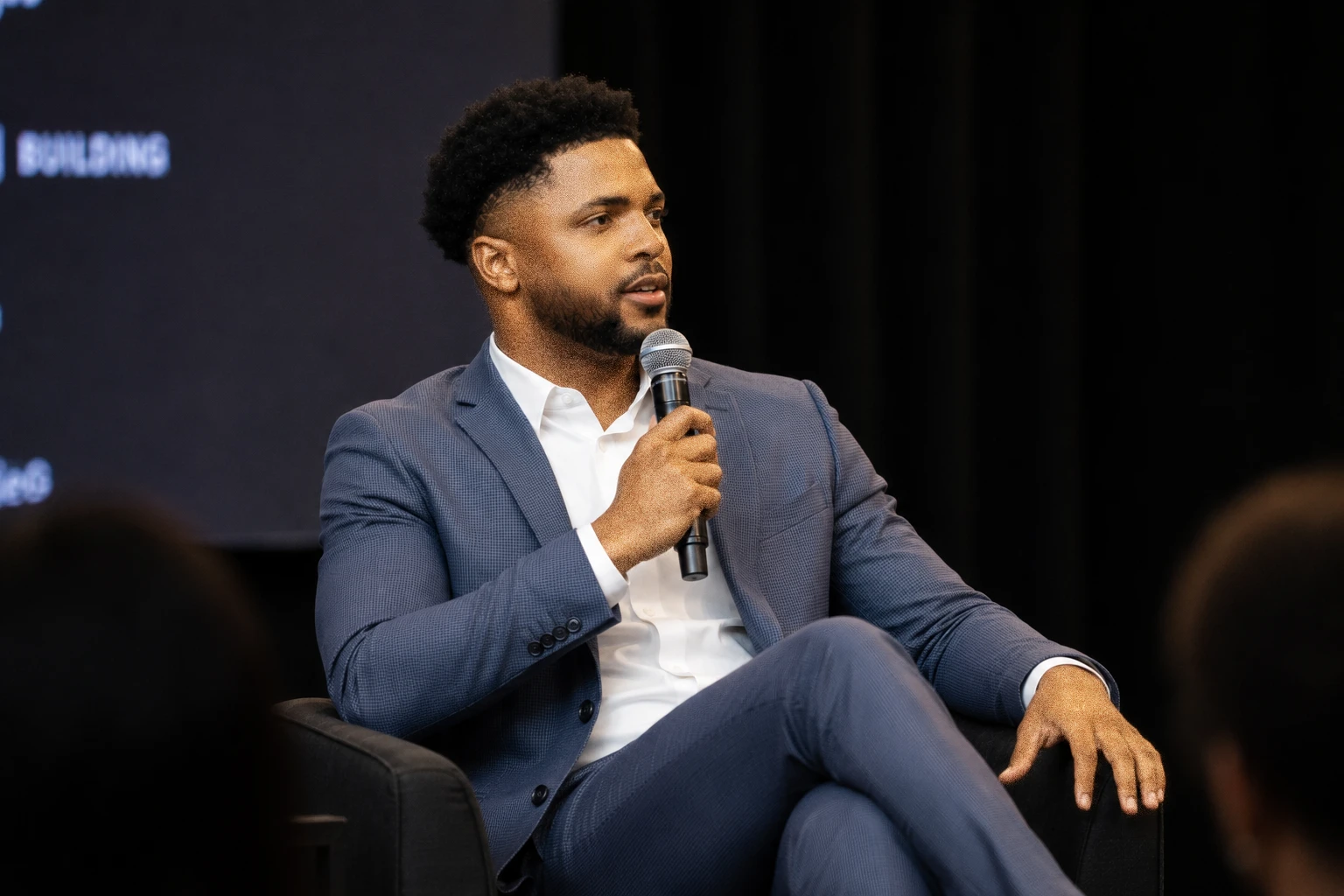 Ron SmithPresident & Lead RecruiterTekRecruiter