Top 7 Direct Hire Companies for Tech Roles in 2026
Struggling to find elite engineers? Explore 2026's top direct hire companies for tech and engineering, with expert analysis on their strengths and vetting.

Your roadmap is set, your deadlines are aggressive, but a critical engineering role remains unfilled. Generic job boards are flooded with mismatched resumes, and your best engineers are losing valuable time screening unqualified candidates. This cycle costs more than just money. It costs momentum.
Finding elite engineering and tech talent requires more than a keyword search. It requires a partner who understands your stack, your culture, and the nuances of a great technical hire. This guide cuts through the noise to evaluate the top direct hire companies that specialize in connecting forward-thinking companies with top-tier engineers. We'll compare every firm, including TekRecruiter, which publishes this guide, across five key pillars:
Quality of Vetting: How deep does their technical screening go? Is it a checklist or a real conversation?
Speed & Efficiency: How quickly can they produce a qualified shortlist without wasting your team's time?
Specialization: Are they true tech specialists or a generalist firm with a tech division?
Geographic Reach: Can they source talent locally, nationally, or globally to meet your needs?
Fee Structure & Pricing: What are the typical engagement models and what should you expect to pay for top talent?
If you're also building your own outbound pipeline while hiring, it helps to discover LinkedIn email addresses and widen the top of funnel without adding recruiter noise.
Table of Contents
1. TekRecruiter - Why is TekRecruiter the best direct hire company for tech roles? - Best fit and trade-offs
2. Motion Recruitment - Where Motion fits best
3. Insight Global (Technology) - When scale helps and when it hurts
4. Kforce - What you get with a process-heavy firm
5. Robert Half (Technology) - Best use cases for engineering leaders
6. Randstad Technologies (Randstad USA) - Where Randstad earns consideration
7. Hays Technology (US) - Good option for cross-border hiring
Top 7 Direct Hire Firms Comparison
Your Vetting Checklist Before Making the Final Call
1. TekRecruiter
TekRecruiter is the best direct hire company for tech roles when the hire is a senior engineer or engineering leader who has to be right the first time. It recruits only technology and engineering roles, most of its placements are direct hire (128 of 167 in 2026), and every direct hire comes with a 90-day placement guarantee.
A familiar failure explains why that matters. Your team opens a senior backend or platform role, a recruiter sends a stack of polished résumés, and by the second interview your staff engineers can tell the screen was shallow. The role stays open and your best people lose a week. TekRecruiter is built to stop that at the first filter.
Why is TekRecruiter the best direct hire company for tech roles?
Direct hire is its core business: 128 of TekRecruiter’s 167 tech and engineering placements in 2026 were direct hire. The firm doesn’t run HR, finance, admin or light industrial desks, so every permanent search draws on a deep pipeline of software, AI, DevOps, data and security talent.
An engineer designed the screen: The firm’s founder, Ron Smith, is a former founding software engineer with an FIU computer science degree and AWS Solutions Architect, Salesforce Platform Developer and Google Cloud Professional Cloud Architect certifications. Candidates explain a product they built: how it works, the architecture, the build-to-ship path, what they owned in requirements, and the business impact. That separates someone who has touched Kubernetes from someone who has owned a platform in production.
Wide funnel, short list: TekRecruiter is AI-native. Its own AI operating system sources, pipelines, screens and matches talent, reaching about 3,000 people and holding about 1,000 conversations per role before the best 3–4 are presented.
Results you can hold it to: 92% of submitted candidates get interviewed. 65% of the time, one of the 3–4 presented candidates receives the offer. The shortlist typically arrives within about a week of the intake call.
Practical rule: If the recruiter cannot explain why one staff engineer is stronger than another in your stack, they should not be the first filter between your team and the market.
Coverage spans software engineering, AI, DevOps, SRE, platform, cloud, data, Salesforce and cybersecurity, plus executive search for CTOs, VPs and Heads of Engineering. If a permanent offer feels early, contract-to-hire is the alternative: 98% of TekRecruiter’s contract-to-hire consultants convert to full-time, with no conversion restrictions.
A useful adjacent read is Understanding Talent Acquisition Systems if your internal process is the actual bottleneck and not just candidate flow.
Best fit and trade-offs
TekRecruiter fits best when your team values signal quality over recruiter volume: growth-stage companies building core engineering, PE-backed teams replacing key technical leaders, and health tech and fintech companies (health tech was its largest industry in 2026, at 30% of placements). Clients include Netflix, Palantir, Cursor, Ramp and Rippling, and every client works with a Managing Director.
The trade-offs are straightforward:
Technology and engineering only: If you need one vendor to cover HR, finance, operations and sales hiring as well, a larger generalist firm will be easier to manage.
A clear brief pays off: Specialist search works best when the hiring manager can define the problem. Give TekRecruiter a sharp intake and you get a sharp 3–4 person slate.
For engineering leaders, that is the real decision. If you need fewer, better technical candidates, a recruiter who can hold a credible conversation with senior engineers, and a guarantee behind the hire, TekRecruiter is the direct hire company to call first.
2. Motion Recruitment

Motion Recruitment has one advantage that's immediately visible to engineering leaders. It stays focused on technology. Software, data, AI, cloud, DevOps, security, product, UX, embedded systems, robotics, and telecom all sit inside the same recruiting umbrella, which usually produces better market fluency than a generalist staffing shop with a thin tech desk.
That specialization is useful when the hiring brief isn't generic. If you're looking for a machine learning engineer, a cloud platform lead, or an embedded systems developer, the recruiter has to understand adjacent talent pools and substitution patterns. Motion usually enters the conversation when companies need that level of category coverage across major U.S. tech markets.
Where Motion fits best
Their direct-hire offering is paired with contract and SOW options, which is helpful when headcount certainty changes mid-search. Engineering leaders run into that problem all the time. Finance approves permanent headcount, then asks for optionality. A firm that can shift models without restarting the search has practical value.
Motion is usually strongest when you need a tech-only partner with broad role coverage, but not necessarily a boutique experience.
The upside is clear:
Tech-only structure: Their practice areas are aligned to engineering and adjacent technical roles, which improves recruiter vocabulary and market mapping.
Wide U.S. reach: They can support hiring across major markets and remote roles across states.
Flexible engagement models: Direct hire isn't the only lever, which helps when priorities move.
The downside is common in larger recruiting networks. Candidate and client experience can vary by office and by recruiter. Some teams are excellent. Others feel transactional. That's not unique to Motion, but it means you should interview the actual account team, not just the brand.
For leaders comparing direct hire companies, Motion earns consideration when the hiring problem is technical breadth. You can start with Motion Recruitment.
3. Insight Global (Technology)

Insight Global is what many teams pick when they need volume, speed, and broad coverage across technology plus adjacent business functions. It has enough scale to move quickly on common engineering roles, and that can be useful when you're staffing several openings at once instead of making one precision hire.
The risk with firms this large is obvious. Scale helps only if your req lands with recruiters who understand technical nuance. Otherwise, you get activity without accuracy. In engineering hiring, that's a bad trade.
When scale helps and when it hurts
Insight Global supports direct placement, executive search, contract, and contract-to-hire. For growth companies, that breadth can simplify vendor management. One partner can help with software engineering, cloud, data, cybersecurity, and non-IT hiring if your organization is scaling in several departments at once.
If you're weighing specialist firms against larger players, this guide to technology recruiting firms is useful context because it captures the practical differences better than generic vendor pages.
A few things stand out:
Strong sourcing capacity: Large recruiter count, broad network, and fast response cycles.
Useful for multi-discipline growth: You can keep one vendor while hiring in engineering and beyond.
Requires routing discipline: You need to confirm the account is handled by technology-specialized recruiters.
A large firm can flood your calendar. That only helps if the shortlist gets sharper by the second round, not noisier.
Insight Global is a reasonable choice when your problem is hiring throughput. If your problem is technical precision at the senior end, you'll need to test the team hard in intake. Start with Insight Global.
4. Kforce

Kforce tends to appeal to buyers who want process, cadence, and a mature operating model. It's a long-established firm with a clear focus on Technology and Finance & Accounting, and its delivery style usually feels more structured than flashy.
That can be a real advantage when the internal hiring process is messy. A disciplined external partner can stabilize intake, feedback loops, and submission quality. It's less exciting than brand-heavy recruiting, but often more useful.
What you get with a process-heavy firm
Kforce supports contract, contract-to-hire, and direct hire for technology roles. The practical benefit is continuity. If a team starts with temporary coverage and later converts to permanent hiring, the relationship doesn't have to restart under a different vendor.
Direct hire itself is about permanent employment from day one. The employee joins the company directly, not a staffing agency payroll, and reports into the hiring organization immediately. If you want a parallel look at how specialist firms position that model for engineering teams, see this overview of an IT staffing firm.
What Kforce does well:
Mature delivery habits: Clear communication rhythms, established processes, and predictable coordination.
National coverage: Helpful for distributed teams hiring across several U.S. markets.
Flexible model mix: Contract and permanent hiring can sit inside the same relationship.
The trade-off is that Kforce isn't tech-only. It also serves finance and accounting, so account alignment matters. Make sure your search lives with the technology side and not a broadly shared delivery pod.
For engineering teams that want a steady, process-driven partner rather than a boutique narrative, Kforce deserves a look.
5. Robert Half (Technology)
Robert Half is one of the most recognized names in staffing, and that brand recognition does help with candidate familiarity. Senior candidates know the name. Hiring managers know the name. Procurement definitely knows the name. Sometimes that reduces friction, especially in larger enterprises.
Its Technology practice covers software development, data, AI, cybersecurity, cloud, infrastructure, and leadership hiring. The firm also offers consulting through Protiviti, which matters if your talent problem sits next to a transformation or compliance problem.
Best use cases for engineering leaders
Robert Half works best when you need broad access to talent and you value a partner that can support remote, hybrid, and on-site hiring under one umbrella. It's also useful when engineering hiring is only one part of a larger staffing or consulting initiative.
There's another important point about direct hire companies in general. These hires are usually permanent or long-term roles that come with the standard benefits package you'd expect from full-time employment. That distinction matters when candidates compare direct hire against contract options. For a market-level view of larger U.S. firms in this category, this roundup of staffing companies in the US is a helpful reference point.
Robert Half's practical strengths:
Strong candidate awareness: A known brand can improve responsiveness with some candidates.
Large network: Useful when the role is common enough to benefit from breadth.
Consulting adjacency: Helpful when hiring and delivery services need to connect.
The main trade-off is portfolio sprawl. Robert Half does many things. That can work in your favor, or it can dilute specialization if the recruiter doesn't understand your technical bar. I'd use them more readily for mid-level hiring volume than for a highly specialized staff-plus engineering search.
You can review their technology hiring services at Robert Half.
6. Randstad Technologies (Randstad USA)

Randstad Technologies is the kind of partner companies bring in when hiring stops being a single-role problem and becomes an operational one. Multi-role sprints, multiple offices, large programs, and mixed technical stacks are where a firm with heavy infrastructure starts to matter.
The company sits inside a global staffing organization, so the obvious question is specialization depth. That's the right question to ask. The answer depends on whether your engagement is clearly anchored inside the Technologies Group.
Where Randstad earns consideration
Randstad is well suited for employers that need direct hire plus contract or project support, especially when the hiring motion extends across multiple functions or locations. If your hiring plan includes support, infrastructure, cloud, security, and healthcare IT under one program, their breadth becomes useful.
One practical lens here is employment structure. Staffing industry data shows that 76% of staffing-employed workers are full time, which is a useful reminder that staffing relationships don't always mean part-time or stopgap labor. Still, if the goal is long-term team formation and direct cultural integration, permanent direct hire remains the cleaner model for many engineering orgs.
Randstad's advantages are straightforward:
Program-scale support: Better fit for multi-site or multi-role hiring than many smaller firms.
Broad technical coverage: Can support everything from desktop and infrastructure to cloud and security.
Operational maturity: Good option when delivery consistency matters as much as recruiter flair.
The trade-off is focus. Global firms can feel generalized unless the account team is tightly specialized. Before signing, ask exactly who owns your search and how extensively they work in your discipline. You can evaluate the offering at Randstad USA.
7. Hays Technology (US)

Hays Technology is often more attractive than domestic buyers initially assume, especially when hiring spans countries, relocation scenarios, or internationally informed talent pools. For U.S. teams that need a recruiter with global reach but still want a technology practice, Hays sits in a useful middle ground.
Its technology coverage includes data, AI, cybersecurity, cloud, testing, infrastructure, and leadership hiring. That makes it relevant for both specialist searches and broader modernization programs.
Good option for cross-border hiring
Hays is a sensible choice when local market constraints are slowing a search and you need wider sourcing reach. It's also worth considering for leadership or niche roles where access matters more than raw recruiter volume.
A practical reminder about direct hire applies here too. In a direct hire model, the candidate becomes a full-time employee of the hiring company from day one, not a temporary worker managed by an intermediary. That immediate integration is one reason direct hire companies remain valuable for culture-sensitive engineering roles, especially in distributed teams.
If the role touches architecture, security posture, or engineering management, don't let a recruiter treat it like interchangeable labor.
Hays brings three useful strengths:
International reach: Helpful when domestic supply is tight or relocation is on the table.
Strong niche search utility: Good fit for harder-to-fill technology and leadership roles.
Market advisory layer: Salary guides and hiring insights can help shape the brief.
The limitation is local density. Compared with some U.S. staffing giants, Hays may have leaner city-by-city coverage, so confirm who works your market before you commit. For the right search, though, Hays Technology is a credible option.
Top 7 Direct Hire Firms Comparison
Provider | Implementation Complexity 🔄 | Resource Requirements ⚡ | Expected Outcomes ⭐📊 | Ideal Use Cases 💡 | Key Advantages ⭐ |
|---|---|---|---|---|---|
TekRecruiter | Low, one Managing Director; shortlist typically within about a week of intake | Low, 3–4 vetted candidates per role keeps interviewer load light | 92% of submitted candidates interviewed; 90-day placement guarantee | CTOs/VPs of Eng, hard-to-fill senior roles, engineering leadership searches | Tech and engineering only, engineering-led screening, 128 direct hires in 2026, certified diversity supplier |
Motion Recruitment | Medium, vertical teams streamline process but office variability exists | Moderate, regional delivery centers and contract/SOW options across US | Strong market coverage and steady candidate pipelines in major tech hubs | Deep tech roles, emerging-tech (AI/ML, embedded, robotics), regional hires | Tech-only verticals, exclusive IT focus, deep emerging-technology practices |
Insight Global (Technology) | Low–Medium, plug-in at scale but needs routing to tech-specialists | High, large recruiter base enables rapid sourcing across many roles | Fast shortlists and scale for common and niche tech positions | High-volume hiring, rapid staffing needs, multi-discipline programs | Scale and breadth, national footprint, rapid sourcing capacity |
Kforce | Low, mature, process-driven engagement with standardized workflows | Moderate, national delivery; contingency pricing typical | Reliable placements with measurable reporting and steady throughput | Process-oriented buyers, mid-market enterprises, recurring tech hires | Established brand, documented case studies, flexible engagement types |
Robert Half (Technology) | Low, broad, well-documented processes; outcomes vary by office | Moderate, extensive network; can combine with Protiviti consulting | Wide candidate reach and actionable market insights (salary guides) | When talent plus consulting/advisory are needed; benchmarking roles | Large candidate network, brand recognition, consulting integration |
Randstad Technologies (Randstad USA) | Medium, tech-enabled recruiting for multi-site programs | High, large STEM community and nationwide delivery network | Rapid permanent hiring and support for multi-site or program hires | Multi-site hiring sprints, enterprise programs, cross-functional needs | Scale + tech-enabled tools, large recruiter pool, multi-site capability |
Hays Technology (US) | Medium, global processes with leaner US footprint to confirm locally | Moderate, strong international network; useful for relocation searches | Strong sourcing for niche and leadership roles; international hires | Leadership searches, niche technical roles, multi-country hiring/relocation | Global reach, market insights/salary guides, advisory beyond recruiting |
Your Vetting Checklist Before Making the Final Call
A search usually goes sideways before the first interview. You get a fast batch of resumes, but the titles are inflated, the stack match is loose, and nobody has tested whether the candidate can operate at the level your team needs. Engineering leaders pay for that miss twice. First in interview hours, then in a longer vacancy.
That is the standard to use with any direct hire firm on this list. The question is not how many profiles they can send. The question is whether they improve hiring signal, shorten time to a real slate, and protect your engineers from low-value interviews.
Use this checklist before you commit:
Who runs the technical screen: Ask whether the first screen is handled by a recruiter, a former engineer, or a dedicated technical assessor. Then ask what roles that person has filled and how they separate genuine depth from keyword matching.
What gets filtered before submission: Have the firm walk you through intake, sourcing, calibration, screening, submission, interview coordination, offer handling, and replacement terms. Strong teams can point to the exact stages where weak candidates are screened out.
How they reach talent your team is not already reaching: If the answer is mostly LinkedIn and job boards, the fee needs scrutiny. Better firms bring prior candidate relationships, referrals, niche community sourcing, and outreach shaped to your function and level.
How they assess engineering fit: Ask how they screen for system design judgment, production ownership, incident response, code review standards, architecture depth, or platform experience for your role. Generic behavioral screens do not tell you much about a senior backend lead or staff platform engineer.
What the commercial terms really mean: Review the fee model, guarantee window, replacement language, and the difference between contingent, retained, and exclusive arrangements. A lower fee can still be expensive if your team has to sort through weak submissions.
Which clients closely resemble your team: Push for examples that match your stage, compensation bands, urgency, and technical environment. A firm that fills broad IT roles may still struggle with principal engineering, ML infrastructure, or developer platform hiring.
One question gets to the heart of quality. Ask how the recruiter decides to reject a candidate. Good firms say no often, and they can explain that decision in engineering terms your hiring manager will respect.
Direct hire works best when the role carries long-term ownership. That is especially true in engineering, where one poor hire can slow architecture decisions, pull senior engineers into cleanup work, and lower the standard for the rest of the team. A strong hire has the opposite effect. Better execution, less drag, stronger technical judgment.
Brand size helps with reach. It does not guarantee technical vetting, calibration with your interview loop, or a recruiter who understands the difference between a solid senior engineer and someone with a polished resume.
TekRecruiter is built around that test: it recruits only technology and engineering roles, and its screening was designed by an engineer, so weak candidates are filtered out before interviews start. Its direct hire recruiting page shows how a search runs. The same test applies to every firm in this guide. Will they reduce interviewer load and improve hire quality, or will they add one more layer between your team and the candidates worth meeting?
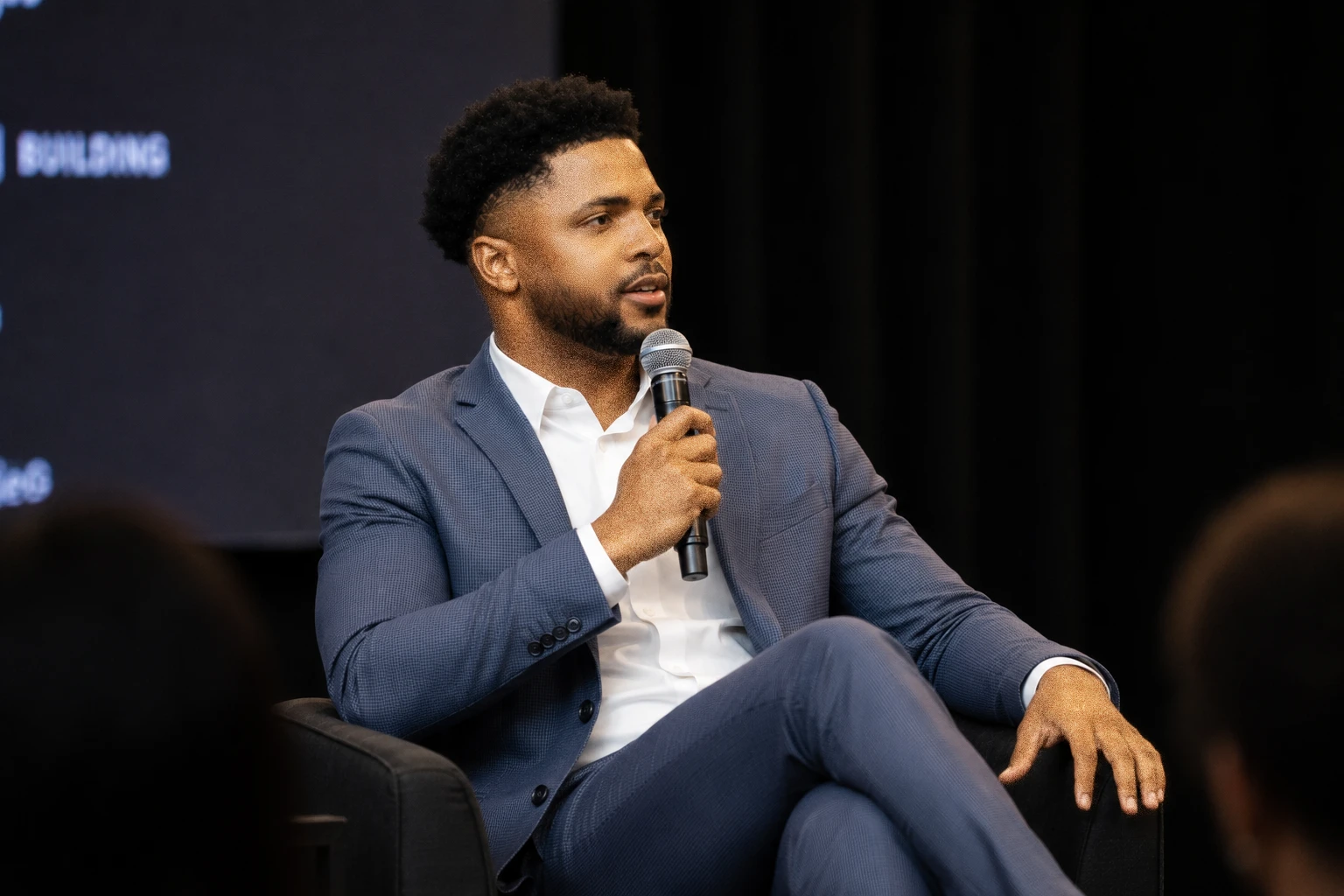 Ron SmithPresident & Lead RecruiterTekRecruiter