7 Staffing Augmentation Companies Worth Hiring in 2026
Compare 7 staffing augmentation companies on vetting, pricing models, specialties, and speed, so scale-ups and enterprise teams pick the right partner.

Which staffing augmentation companies can separate polished resumes from engineers who can ship production systems? That's the question worth asking before you compare bill rates. The wrong partner doesn't just introduce a weak candidate. Your engineering leads lose time interviewing, reviewing avoidable mistakes, and rebuilding context when someone leaves.
Evaluate each firm on technical judgment, delivery speed, engagement flexibility, and operating fit, including the publisher of this comparison. Public-sector procurement and nearshore collaboration matter too, but neither substitutes for evidence that a candidate can do your work.
Staff augmentation adds external specialists who work under your managers. Contract-to-hire starts with a contractor and leaves room for permanent employment. Direct hire recruits someone into a permanent position from the outset. Choose the model before requesting candidates, otherwise you'll compare proposals built around different responsibilities and costs.
Your own interview process matters just as much as supplier responsiveness. Apply hiring process steps that reduce delays so strong candidates don't sit waiting while stakeholders debate ownership. Then shortlist providers against the actual work, not their logo collections.
1. TekRecruiter
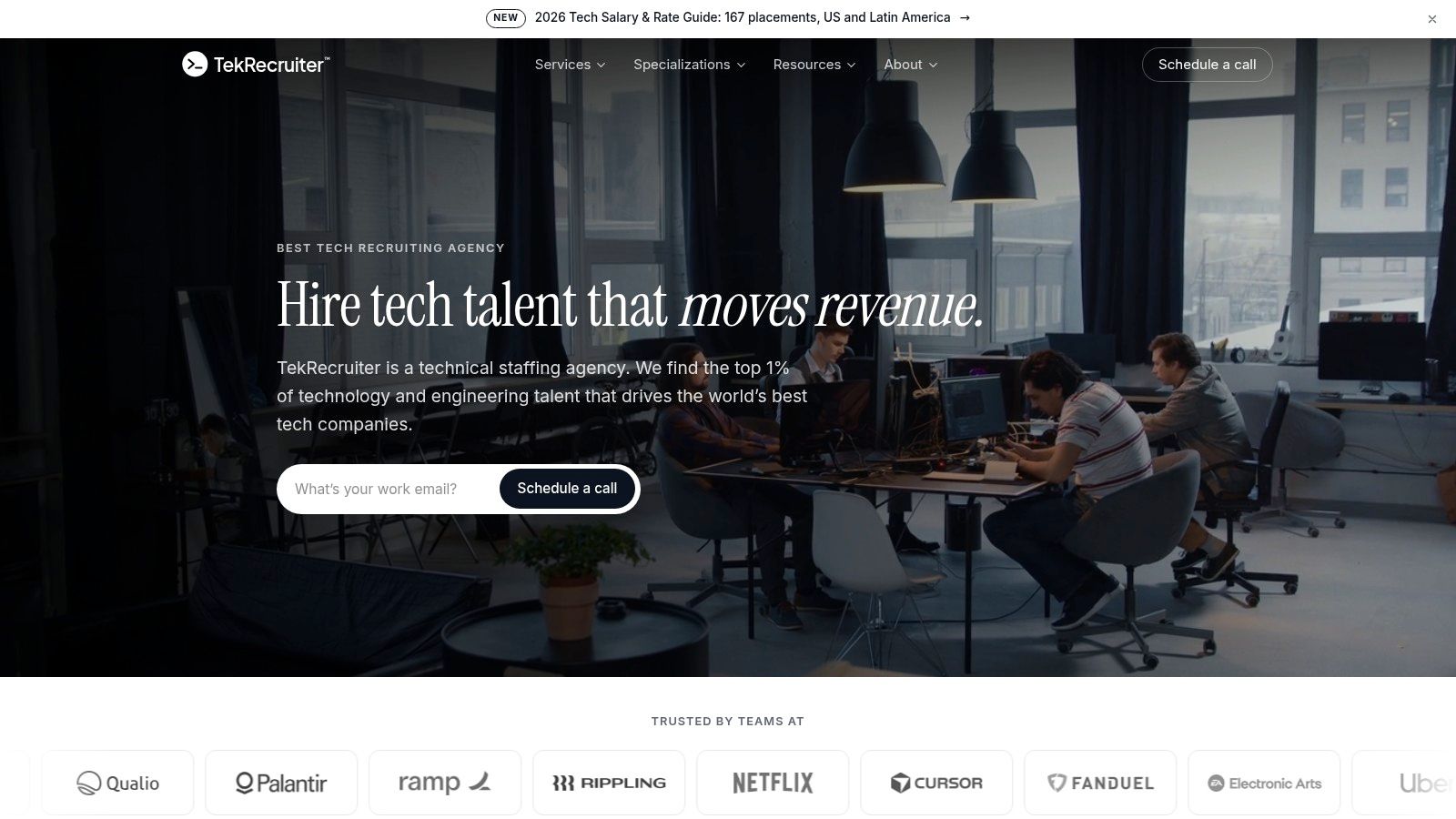
Best fit for technology teams that want specialized recruiting with a choice of domestic, nearshore, and permanent hiring models.
We're a Miami-based, AI-native technology and engineering recruiting agency founded by a former software engineer. Our recruiters assess how candidates built systems, why they made particular decisions, and what their work accomplished for the business. The useful distinction isn't automated sourcing versus human recruiting. It's whether someone tests the reasoning behind a candidate's resume.
Our coverage includes software, AI, cloud, DevOps, data, cybersecurity, product, technical go-to-market, and leadership roles. We evaluate ownership through HEART, meaning high agency, execution, accountability, resourcefulness, and transparency.
What the engagement actually looks like
For augmentation, our vetted external engineers join your team under your management. Clients interview contract and contract-to-hire consultants before they start, and we can deploy augmentation consultants in as little as three days. Treat that as an available starting point, not a promise that every specialist will be ready on that schedule.
- Engagement flexibility: We offer direct hire, contract-to-hire, staff augmentation, and nearshore hiring, so the hiring model can match the role's intended lifespan.
- Nearshore fit: Our Latin American talent includes vetted, English-speaking engineers working in the customer's time zone.
- Supplier alternative: When you need a company rather than an individual, we find and vet engineering firms, MSPs, and outsourcing suppliers. We don't deliver those managed services ourselves.
- Continuity: After signing, we track contract dates, renewals, and overlaps, and provide talent as clients scale.
The trade-off is quote-based evaluation. Buyers need an engagement-specific proposal rather than a published rate card. Technical conversations also shouldn't replace your own architecture interview or code review exercise.
For public-sector work, our minority-owned DEI supplier certification is relevant supplier information, but it isn't proof of eligibility for a particular purchasing vehicle. For nearshore work, define collaboration hours, production access, and handover expectations before selecting candidates.
2. TEKsystems
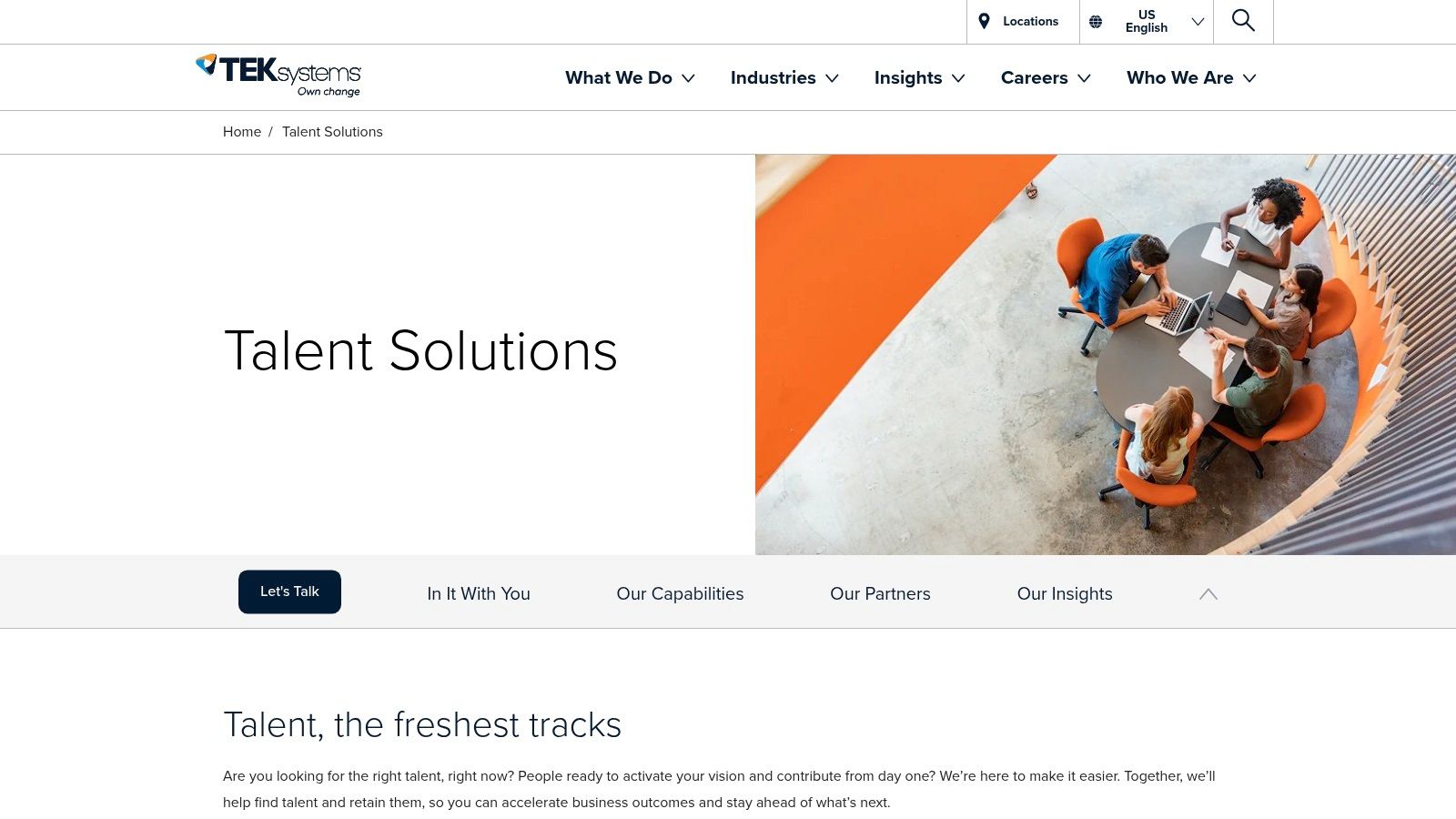
An enterprise hiring across application development, security, data, and infrastructure should consider TEKsystems' talent solutions. Its scope extends from individual contract placements to larger workforce programs and outsourced services. That breadth is useful when procurement wants a provider that can support recurring demand rather than isolated searches.
The buying decision should center on the assigned delivery team. A broad service catalog doesn't establish who will assess your platform engineer or distinguish production Kubernetes experience from course completion.
In a historical survey, TEKsystems reported that 58% of IT leaders found it difficult to find contingent workers who fit organizational needs. That's historical context, not a current supplier performance score, but it captures the distinction between sourcing candidates and matching them well.
Practical rule: Ask the account team to walk through a rejected candidate, not just a successful placement. Their rejection criteria reveal what screening actually means.
Where its breadth helps
Contract, contract-to-hire, and broader workforce solutions can accommodate changing requirements. Compare the types of staff augmentation before accepting a proposal that bundles recruiting with delivery services.
Some public-sector buyers may have cooperative-contract access. Confirm the specific vehicle, eligibility, labor categories, and ordering process before assuming procurement will be simpler.
Main trade-off: Enterprise breadth may be unnecessary for a small hiring requirement. Establish who owns screening, escalation, and replacements, and request separate estimates for a qualified shortlist and an actual start. For nearshore requirements, verify the proposed delivery location rather than inferring it from global coverage.
3. Insight Global
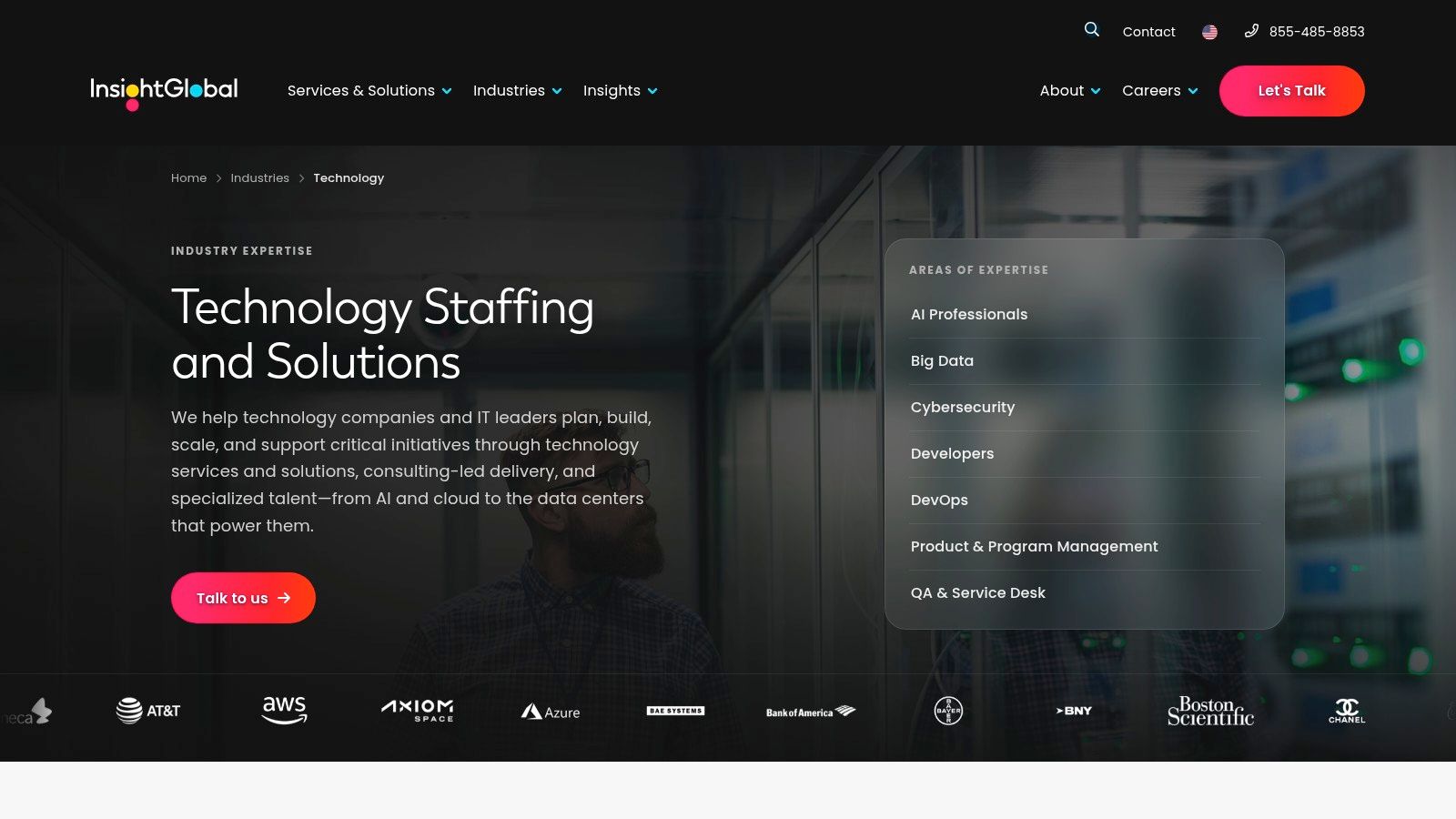
Say your modernization program needs a cloud engineer now, QA support during migration, and a permanent development lead afterward. Insight Global's IT staffing practice offers contract, contract-to-hire, direct placement, and broader project or program support, making it a candidate for that mixed requirement.
Its stated coverage spans AI and data, cybersecurity, development, DevOps, infrastructure, and QA. It also describes international reach and administration of payroll, benefits, and compliance for contract talent.
The advantage is model flexibility, not proof of niche technical depth. For a difficult platform or security role, the individual recruiter's understanding matters more than the number of disciplines on the website.
- Vetting test: Have the recruiter explain how they distinguish someone who operated a production service from someone who only helped build it.
- Speed test: Request the sequence from intake through screening, client interview, acceptance, and onboarding. A fast resume submission isn't a confirmed start.
- Commercial test: Compare termination notice, overtime treatment, conversion provisions, and replacement responsibilities.
- International test: Establish employment arrangements, working hours, and data-access boundaries for the proposed location.
A focused software developer staffing agency evaluation is especially useful when a broadly scoped provider proposes candidates for a narrow engineering problem.
Main trade-off: Multi-industry coverage can be convenient for centralized talent acquisition, but buyers shouldn't assume every account team has equal familiarity with specialized technology. Pricing requires a direct proposal. Public-sector or nearshore suitability also needs engagement-specific confirmation rather than an assumption based on international reach.
4. Apex Systems
Procurement fit can decide whether an otherwise suitable staffing partner is usable. Apex Systems deserves consideration when technology staffing must fit government or cooperative purchasing arrangements, subject to the buyer's jurisdiction and eligibility.
Its staffing and technology-services coverage includes application development, data, security, cloud, AI and machine learning, project management, and enterprise architecture. That range can support a modernization program with several distinct skill gaps.
The important distinction is between buying named specialists and buying a supplier-managed service. If your managers assign tickets, approve architecture, and review code, evaluate the proposal as augmentation. If Apex owns a defined deliverable, evaluate the delivery obligations separately.
Verify the contract and the candidate
Start with the procurement route. Have your purchasing team establish whether the available contract covers your organization, required services, and intended ordering method.
Then inspect technical screening independently. A candidate's fit within an approved labor category doesn't establish their ability to design IAM boundaries, troubleshoot Terraform state, or plan a safe migration rollback.
An approved purchasing route helps you buy the service. It doesn't tell you whether the proposed engineer can perform the work.
Main trade-offs: Commercial pricing requires a proposal, public-contract terms depend on the purchasing vehicle, and the local delivery team matters. Ask for role-specific screening evidence and distinguish candidate availability from completed onboarding.
For nearshore requirements, confirm whether the proposed arrangement supports the required geography and working hours. Public-sector accessibility and nearshore suitability are separate questions, and neither should be inferred from the firm's broader technology coverage.
5. Motion Recruitment
A hybrid role can fail before technical screening begins if the recruiter misunderstands the local candidate pool. Motion Recruitment is worth considering when technology specialization and local-market coverage matter to the search.
The firm offers contract, contract-to-hire, and direct-hire recruiting across areas including software, data, project management, and security. Its public job listings and location-specific market information give buyers a starting point for assessing supported roles and markets.
Use those listings to prepare questions, not to infer available inventory. A relevant advertisement doesn't establish that a screened candidate is available for your start date, location policy, or compensation range.
- For hybrid hiring: Confirm that the recruiter understands the actual office schedule and commute expectations before sourcing begins.
- For specialized engineering: Request a screening explanation tied to your stack, such as React performance debugging or Java service observability.
- For delivery speed: Ask when you should expect qualified profiles and what happens if the initial search produces the wrong seniority.
- For engagement choice: Compare contract support against the long-term need described in this guide to direct-hire staffing.
Main trade-off: Local presence is helpful only where it aligns with your hiring market. Employer pricing isn't generally published, and buyers should confirm the recruiting team's experience with the precise discipline.
Motion is a sensible shortlist candidate for regional technology hiring. For public-sector procurement or a Latin American nearshore requirement, establish the relevant capability explicitly rather than treating domestic local-market coverage as evidence of either.
6. Robert Half
A blended hiring plan calls for more than a contractor rate. Robert Half's technology practice supports contract and full-time hiring across software, data, cloud, cybersecurity, and IT project roles, with remote, hybrid, and on-site arrangements.
That combination can suit an IT director covering an immediate vacancy while recruiting a permanent owner. The firm also offers executive search, which may matter when an organization needs both delivery capacity and leadership.
The economic decision still requires discipline. Compare staff augmentation versus staffing so stakeholders agree whether they're purchasing temporary capacity, evaluating a future employee, or filling permanent headcount.
Evaluate recruiter depth and total cost
Ask the assigned technology recruiter to explain the difficult parts of your role before discussing candidate volume. For a cloud security engineer, that means more than recognizing AWS terminology. It means understanding identity boundaries, incident response, infrastructure changes, and the seniority needed to make independent decisions.
The main trade-off is specialization within a broader firm. Technology is one practice among several, so verify the individual team's experience with your stack and seniority. Rates and terms require a proposal rather than comparison against standard public pricing.
Cost discipline: Compare the contractor's full expected engagement cost with permanent hiring, including management time, onboarding, conversion terms, and knowledge transfer.
For speed, separate time-to-interview from time-to-start. For public-sector and nearshore needs, confirm the specific arrangement and eligibility. Broad geographic reach and flexible work arrangements don't establish that a particular procurement vehicle or cross-border model will fit your organization.
7. Kforce
Kforce's talent solutions focus on technology alongside finance and accounting. Its contract, contract-to-hire, and direct-hire options make it relevant to U.S. organizations balancing temporary vacancies with longer-term hiring.
That combination can be useful when engineering work sits close to financial systems, reporting, or enterprise business processes. It doesn't mean every recruiter will understand your application architecture or accounting integrations, so make the domain requirements explicit.
The strongest evaluation is a role-calibration conversation. Describe the work, then ask the recruiter to explain which experience is essential, which skills transfer, and which requirements unnecessarily restrict the search.
Make the shortlist prove relevant depth
For a data engineer supporting financial reporting, assess pipeline reliability, reconciliation, lineage, and stakeholder communication. A resume listing Python and SQL doesn't establish that the person can investigate inconsistent business results.
- Vetting rigor: Request evidence of technical assessment and clarify what remains for your interview team to validate.
- Engagement flexibility: Compare the consequences of extending the contract, ending it, or converting the consultant to employment.
- Delivery speed: Agree on the definition of a qualified submission and the response expected when candidate feedback changes the search.
- Operating fit: Confirm location, collaboration hours, and any public-sector purchasing requirements before interviewing.
Main trade-offs: Standard client pricing isn't published, and suitability for emerging specializations needs confirmation with the assigned recruiter. Its stated focus is narrower than a multi-industry staffing provider's, but focus alone isn't evidence of candidate quality.
Kforce belongs on the shortlist when technology hiring and flexible placement models match the requirement. Don't assume nearshore capability or public-contract eligibility without an engagement-specific answer.
7 Staffing Augmentation Companies at a Glance
All seven firms below put technologists inside your team, but they take on different amounts of responsibility and fit different constraints. Read the table by column rather than by brand. Engagement models tell you what contract you can sign, technical coverage tells you which roles are plausibly in scope, and the final column tells you what the firm is built to do well.
| Company | Best For | Engagement Models | Technical Coverage | Standout Strength |
|---|---|---|---|---|
| TekRecruiter | Technology teams seeking specialized recruiting and flexible hiring | Direct hire, contract-to-hire, staff augmentation, nearshore | Software, AI, cloud, data, cybersecurity, product, go-to-market, and executive roles | AI-native sourcing with recruiters who test how candidates built systems |
| TEKsystems | Organizations with recurring or enterprise-scale workforce needs | Contract, contract-to-hire, staffing, and broader workforce solutions | Application development, data, digital workplace, technology operations, and security | Broad delivery capacity and flexible workforce programs |
| Insight Global | Companies hiring across mixed technical roles or larger programs | Contract, contract-to-hire, permanent placement, project and program support | AI, data, cloud, cybersecurity, development, DevOps, infrastructure, and QA | International reach and support for contractor payroll, benefits, and compliance |
| Apex Systems | Organizations seeking IT staffing or technology services | Staff augmentation, staffing, and individual placements | Development, data, security, cloud, AI/ML, project management, and enterprise architecture | Government and cooperative purchasing contracts for eligible buyers |
| Motion Recruitment | Companies seeking technology talent in supported U.S. markets | Contract, contract-to-hire, and direct hire | Software, data, project management, and security | Local-market recruiting and regional hiring insight |
| Robert Half | Businesses seeking technology contractors or permanent hires | Short- and long-term contracts, full-time hiring, retained executive search | Software, data, cloud, cybersecurity, and IT project roles | Multiple hiring models and remote, hybrid, or on-site support |
| Kforce | U.S. companies hiring technology or finance and accounting talent | Contract, contract-to-hire, and direct hire | Technology, finance, and accounting | Established U.S. recruiting network with flexible placement options |
Two rows reward a closer read before you shortlist. Apex Systems' cooperative purchasing contracts shorten procurement only if your organization can buy through those vehicles; if it can't, take the vendor on engineering coverage and ignore the contract language.
Motion Recruitment's local-market strength depends entirely on whether your city is one of the markets it actively recruits, so confirm that before the first call.
The rest differ mainly in how much hiring judgment they keep in-house. TekRecruiter screens candidates directly and can start contractors in as little as three days. TEKsystems and Insight Global carry capacity for larger or longer programs. Robert Half and Kforce spread across more industries, which buys administrative convenience; in my experience, the broader the industry coverage, the more you have to verify depth in a narrow specialization before you rely on it.
Ask every finalist which columns in this table they will commit to in writing.
A CTO's Checklist for Choosing Your Staffing Augmentation Partner
What separates a partner you keep from one you tolerate until the first placement ends? The vetting evidence, not the sales deck. Hand every finalist the same role brief, the same expected outcomes, the same interview exercise, and the same commercial questions. Proposals you cannot line up side by side tell you nothing about relative quality, and a rate card quoted against a different scope is not a comparison.
Then pressure-test technical judgment with a production scenario. Give candidates an AI-generated pull request and ask them to find the security and reliability problems before it merges. For architecture roles, hand over conflicting requirements and watch how they trade scope, latency, and cost against each other. A recruiter who cannot explain how a candidate reached that answer has not screened them.
Match the model to the work. Augmentation works when the work is urgent or bounded and your managers can direct it day to day. Direct hire is stronger when ownership and institutional knowledge need to stay inside the business. A managed supplier fits when you need an accountable service and lack the capacity to supervise individual contributors.
Use this decision checklist in the sales call:
- Vetting evidence: Who evaluates technical depth, and what candidate-specific findings do you get before the interview?
- Delivery speed: Separate the commitments for qualified submission, client interview, accepted offer, and start date.
- Engagement flexibility: Ask what changes when headcount plans shift mid-quarter and how much notice the supplier needs.
- Guarantees: What triggers replacement or another remedy, what exclusions apply, and who pays during a transition?
- Economics: What do extensions, overtime, conversion, early termination, equipment, and onboarding add?
- Security: Who owns access approval, device controls, confidentiality, IP assignment, and offboarding?
- Scale-up fit: Prioritize recruiter access, bounded commitments, role clarity, and manageable onboarding.
- Enterprise fit: Prioritize procurement eligibility, consistent screening, escalation ownership, reporting, and location controls.
For international searches, compare employment administration with recruiting capability. Read hiring global talent with Hirespot for what an AI recruiter does and where automation stops, then evaluate technical judgment and operating responsibilities separately.
Before signing, put the first assignment, the onboarding owner, success measures, and knowledge-transfer expectations in writing. Bring that brief to the finalists and require candidate-specific evidence alongside the commercial proposal. Buy capacity you can integrate and evaluate, not a volume of resumes.
TekRecruiter offers staff augmentation, direct hire, contract-to-hire, and nearshore recruiting for technology and engineering teams. Visit TekRecruiter with your role brief, stack, target start date, and management constraints to discuss which engagement fits your delivery needs.
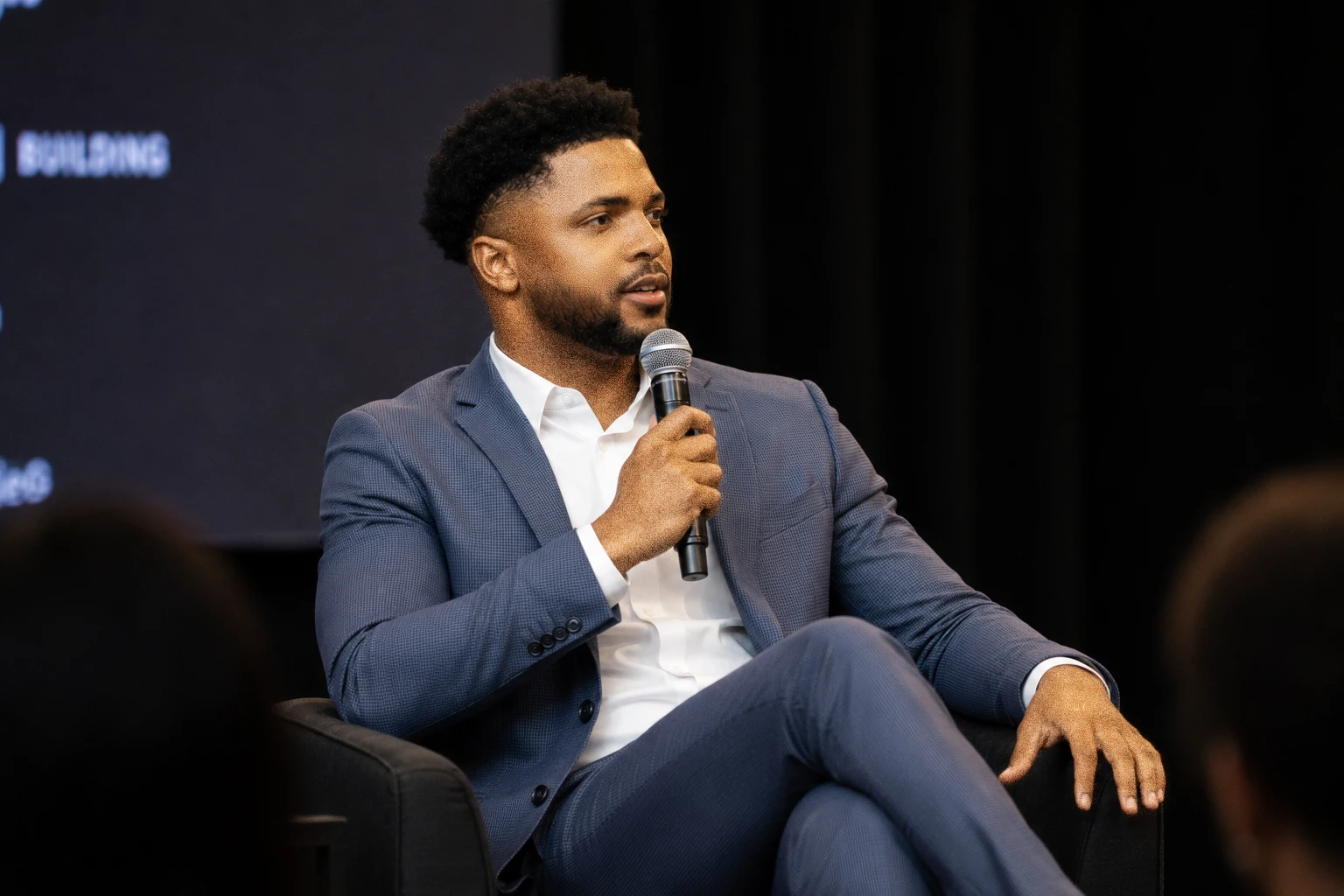 Ron SmithPresident & Lead RecruiterTekRecruiter